

How to Care for New Turf: A Guide to the First 30 Days
Are you thinking of buying turf but are worried about aftercare? Or perhaps you have already laid your new lawn and are wondering how to look after it properly?
While it may seem overwhelming at first, caring for your new grass does not have to be complicated. However, the care that you provide within the first 30 days is critical. When this is done correctly, it can set your lawn up for success for years to come.
From watering it correctly and carrying out the first mow to slowly transitioning into ongoing maintenance, learn how to care for your new turf like a professional.
Days 1–7: Helping Your New Turf Establish
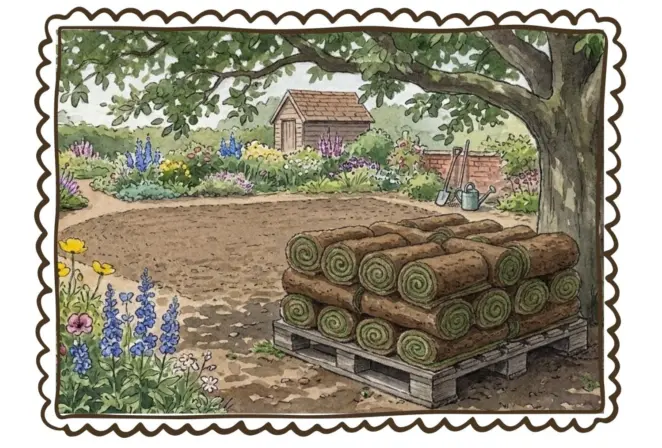
When your turf arrives, it may be moist or slightly dry. This depends on the weather conditions at the time of harvesting. As turf is a perishable product, it is important to prepare the ground beforehand and lay it as quickly as possible. Ideally, this should be done on the day of delivery. If this is not possible, we advise removing the pallet wrap as soon as possible and moving the turf to the shade.
When it comes to new turf care, watering your lawn correctly is key. Make sure to do this immediately after laying using a hosepipe or a sprinkler until the water has soaked through to the soil beneath the turf layer.
For the rest of the week, stay off your lawn and water it regularly.
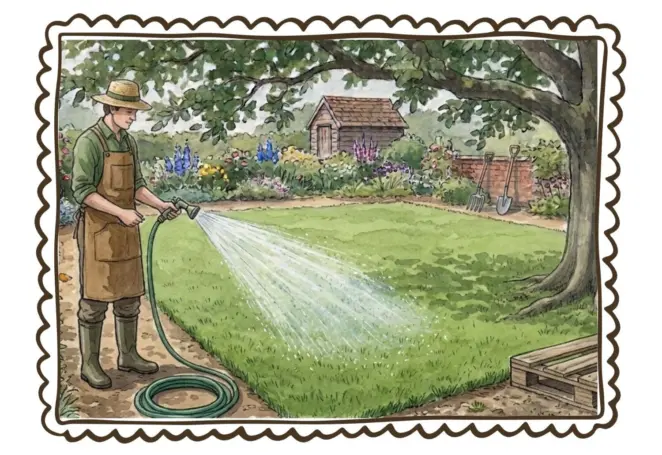
In autumn and winter, aim to do this once a day, unless the weather does it for you. However, during summer, particularly in hot and dry weather, you may need to water twice a day to prevent the turf from drying out.
For best results, water your new lawn in the morning when the sun is lower on the horizon, resulting in cooler temperatures and less water evaporation. This allows moisture to soak into the soil properly, reaching the grass roots.
If watering in the morning is not an option for you, doing so in the evening is your second-best option. This is again due to lower temperatures and the sun being lower on the horizon. However, the foliage stays wet for longer, which can potentially increase the chances of fungal diseases.
If you spot signs of your turf drying out, such as gaps, lifting, browning, or curling, water immediately and profusely.
Days 8–14: Checking Root Development
During the second week of your newly laid turf care, your lawn should gradually start to anchor itself to the soil beneath.
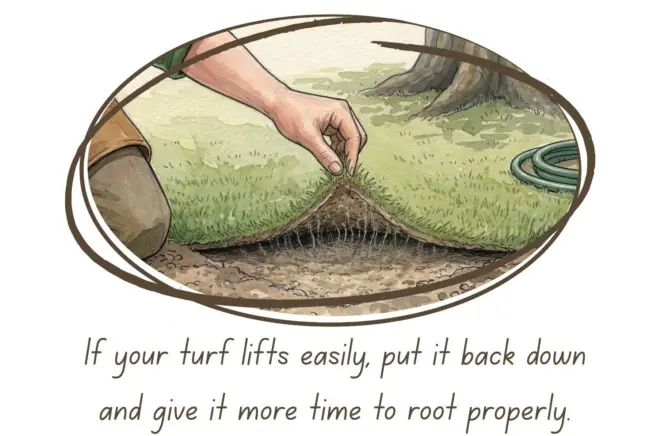
To check if your turf has rooted properly, check if the joints have blended together and then perform a gentle pull test. This can be done by carefully lifting a corner of the turf with your fingers. If it lifts easily, put it back down and give your lawn a little more time to establish. Continue watering as needed and don’t worry too much. Rooting is highly weather-dependent. If it has been cold, the roots may take longer to establish.
However, if you feel resistance and the turf does not lift, it has rooted properly into the soil below. You can skip to the next section as your lawn is officially ready for its first mow, provided it is actively growing.
Days 15–21: Your First Mow
Once your turf has rooted properly, it is time for its first mow.
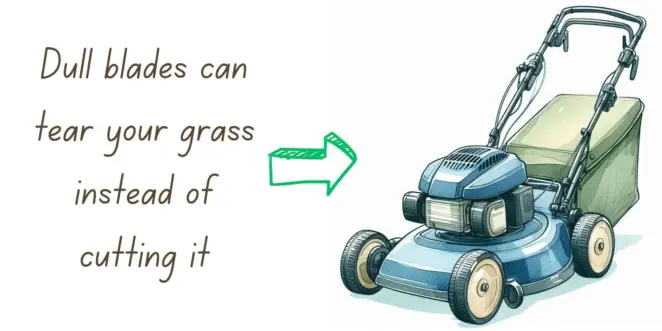
Before you start, make sure that your lawn mower is in good condition. An unkempt lawn mower is likely to have dull blades that tear the grass, instead of cutting it. This can cause your turf to look untidy and make it more susceptible to fungal infections and diseases. It will also slow the recovery process after mowing, meaning your grass will grow more slowly. To learn more about this, make sure to check out our 'Lawn Mower Maintenance: All You Need to Know' guide.
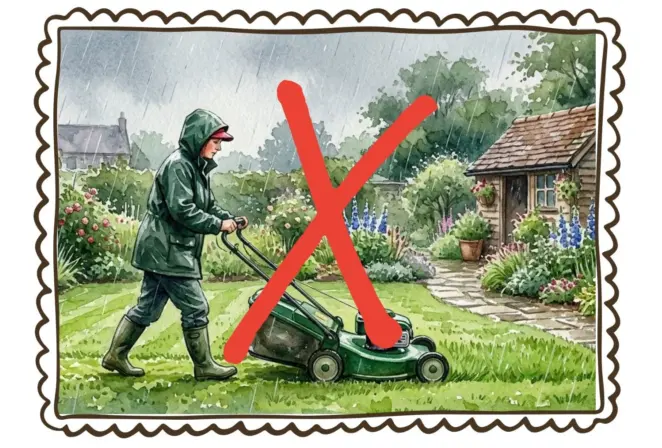
Once your mower is ready, choose a dry, mild day to mow. Avoid cutting your lawn when it’s wet as your mower will likely struggle to get a clean grip of the grass blades. It can end up tearing them rather than giving them a clean cut, leaving your grass weak and vulnerable to diseases, like Red Thread or Dollar Spot. However, if mowing in wet conditions is unavoidable, visit our 'Can You Cut Wet Grass?' blog for advice on how to do it safely.
When mowing, choose the highest cutting height setting and do not take more than one-third of the grass’ length in one go. Cutting it down further can scalp the lawn, stress the turf, and make it more susceptible to diseases and weeds.
At this stage, you should gradually reduce the amount of watering that you do to every other day or so, depending on the weather.
You may also be wondering 'when can you walk on new turf?' Now that your lawn is firmly rooted, you can gradually introduce light foot traffic.
Days 22–30: Maintaining Your New Turf
By the fourth week, you should focus on less frequent but deeper watering to encourage deep root growth for your new turf. This will allow your grass to be more resilient and handle tricky conditions, such as drought, better in the future.
In terms of lawn mowing, carry on doing this as often as necessary. Depending on how quickly your grass grows, during the growing season this may be every week or every few weeks. Make sure to do this regularly so that you never take more than one-third of the grass height off. If you would like to get it to a shorter length, start gradually reducing the mowing height with each mow.
Ongoing Maintenance
After the first 30 days, you can start gradually transitioning towards more regular lawn maintenance to keep it healthy, green, and looking its best. This includes regular mowing, watering during drought, and introducing other lawn care tasks, such as feeding.
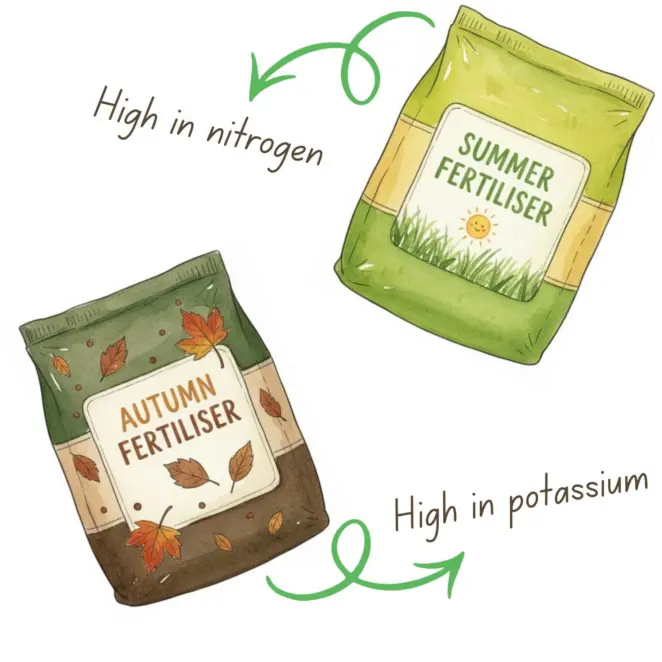
When it comes to feeding a new lawn, this is best done when turf is fully established, so wait until it is around 6 weeks old or older. When you do apply fertiliser, make sure to choose a suitable product for the season. For example, a feed made for spring and summer is high in nitrogen. This promotes vibrant, dense foliage, while other nutrients encourage deeper roots, making your lawn more drought-resistant just in time for hotter weather.
An autumn and winter feed, on the other hand, is high in potassium and low in nitrogen. This helps the plant to build stronger cell walls and resist the cold without causing leggy growth.
When it comes to more intensive treatments, such as scarification and aeration, make sure to hold off on those until much later. Scarification should only be done once your lawn is at least 12 months old, while aeration can be done after 6 months.
Caring for your new turf does not have to be complicated. By watering it correctly, staying off it while it’s rooting in, and mowing it only once it is recommended to do so, you can set your lawn up for success.
However, remember lawn care does not stop after the first month. To learn more about how to take care of your turf all year round, visit Online Turf’s Lawn Care Calendar.
Are you ready to give your garden a fresh start? Explore our range of turf for sale at Online Turf and order yours today!
