


Can You Cut Wet Grass?
It’s a question many UK homeowners find themselves asking, especially during rainy seasons like spring or autumn, when you want to tidy up the garden but simply cannot get a dry day to do it.
If you find yourself wondering, "Can I mow wet grass?", the short answer is that you should ideally wait until your lawn is completely dry. While it is technically possible to mow a wet lawn, doing so can damage your grass, break your mower, and rarely give you the clean, crisp finish you are looking for.
Can I Mow in the Rain?
Before we look at damp grass, we need to address active rainfall. If you’re asking, "Can I mow in the rain?", the answer is a firm no, especially if you use a corded electric mower. Electricity and water are a dangerous combination, and most manufacturers explicitly state that electric mowers are not designed for use in the rain.
Even if you use a petrol or battery-powered mower, mowing while it is actively raining will immediately clog your mower deck and leave your lawn covered in heavy, suffocating clumps of wet clippings.
Why You Should Avoid Cutting Wet Grass
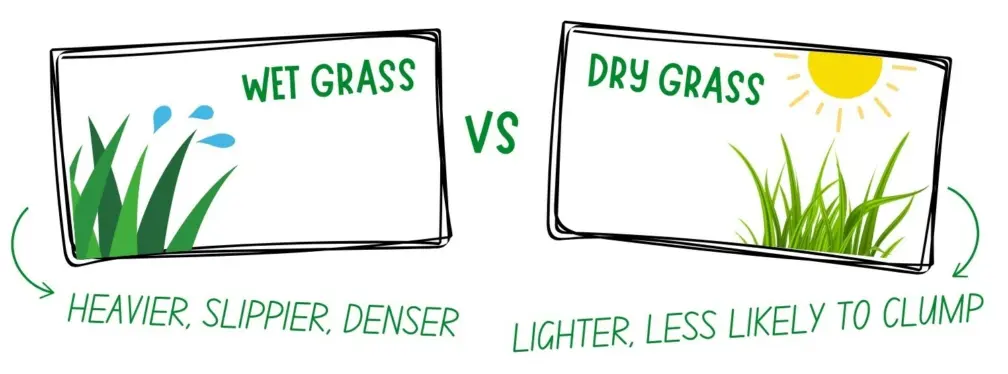
Damp grass is heavier, stickier, and far more resilient than dry grass. Pushing a mower over a wet lawn causes three main problems:
- Damage to the Grass Plant
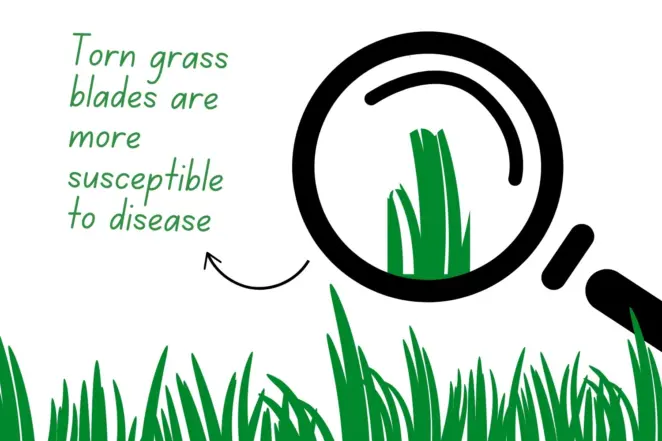
Your mower will struggle to get a clean grip on wet grass. Instead of slicing the blade neatly, the mower tends to rip or tear the grass. Torn grass blades make for an unhappy lawn, leaving the plant weakened and highly vulnerable to lawn diseases like Red Thread or Snow Mould (Fusarium Patch).
- Soil Compaction
The heavy weight of a mower rolling over wet, soft ground will compact your soil. This squashes the air out of the earth, limiting airflow to the roots and creating poor drainage. Over time, this leads to waterlogging, stunted root growth, and bare patches that will eventually need to be repaired with fresh Lawn Grass Seed.
- Damage to Your Mower
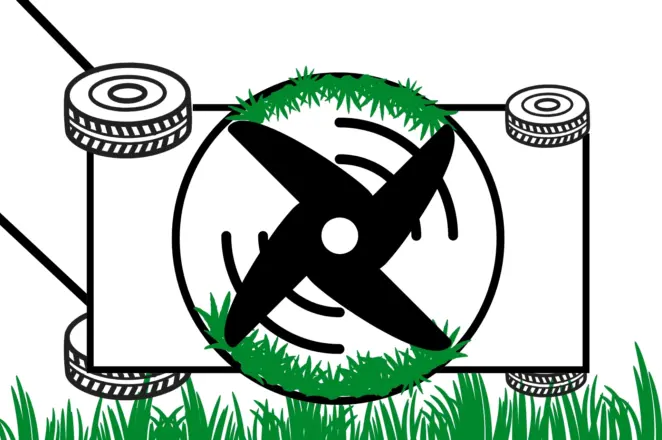
Wet grass clippings instantly clump together, clogging the mower deck and blades. If these clippings are not removed immediately, they cement to the deck as they dry and become incredibly difficult to scrape off. Also, because wet grass is so dense, your mower’s engine has to work twice as hard, which can lead to overheating and engine failure.
How to Cut Wet Grass Safely (If You Have No Choice)
We always recommend checking the local weather forecast and timing your mow for a dry spell. However, with standard British weather, things don’t always go to plan.
If you have an event coming up and the grass simply must be cut, here’s how to mow wet grass as safely as possible:
- Use a high-powered mower: Ensure your mower is in excellent condition with sharp blades. Blunt blades will tear heavy, wet grass.
- Ditch the cord: Use a battery or petrol-powered mower rather than a mains-electric one to minimise the risk of shocks.
- Raise your mowing height: Do not try to cut the grass short. Raise your mower deck to its highest setting to simply 'knock the top off'. Taking a smaller amount of height off is much easier for the mower engine to handle and prevents scalping.
- Mow slowly: Take your time. Stop regularly, turn off the motor, and clear any clumps that form in the deck.
- Bag your clippings: Don’t leave wet clippings to mulch on the lawn. They will smother the living grass underneath and limit airflow. Bag them and add them to your compost pile.
The Strimmer Alternative
If your grass is very long and wet, a popular alternative is using a strimmer, known as Weed Whacking in the USA, to knock the length down quickly. Strimmers can handle tall, damp areas better than standard mowers and do not clog as easily.
However, strimmers rely entirely on your hand-eye coordination. It’s very easy to accidentally scalp the lawn. Use a smooth, sweeping motion to take a small amount of length off, and then wait for a dry day to finish the job neatly with your lawnmower.
When in doubt, patience is the best tool in your shed. Waiting for your grass to dry gives you the best chance for an even, healthy, and satisfying cut.
For more helpful tips, follow our lawn mowing and seasonal lawn care guides.
Have a specific question about cutting your grass when it’s wet? Get in touch and we’ll be able to provide tailored advice.
