

What Does Topsoil Do? Why Your Lawn Needs It
Are you planning to lay new turf and wondering whether investing in good-quality topsoil is really worth it?
Many homeowners spend a lot of time researching the type of turf that's right for their garden, but give very little thought to the soil underneath it. No matter how good the turf you choose is, it will struggle if it is laid onto poor-quality soil, just like a house built on weak foundations.
This is why investing in good-quality topsoil is so important. So, what does topsoil do? It provides essential nutrients, can be used to improve drainage and airflow, and creates a level surface, giving your turf the best possible start and helping it thrive for years to come.
Whether you're laying a new lawn or improving an existing one, understanding the role of topsoil will help you achieve the best results.
What Exactly Is Topsoil?
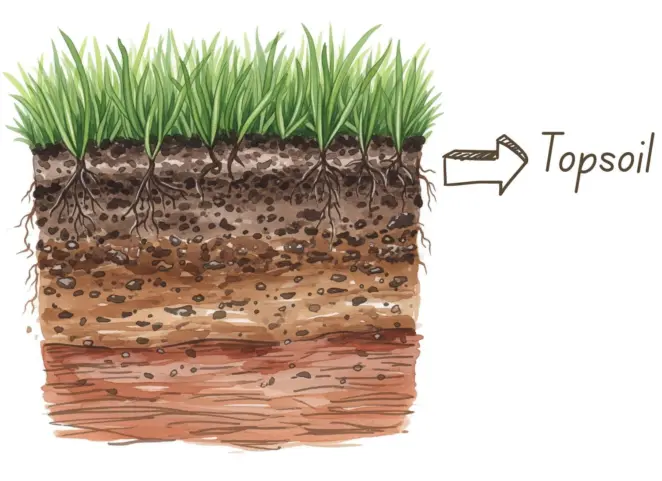
According to the RHS, ‘Topsoil is the uppermost layer of soil, which is high in nutrients and organic matter’. It can be found in forests, fields, and most gardens unless it has been removed.
If present, it typically ranges from 5 to 20 cm deep and is where most plants grow their roots so they can benefit from its nutrients.
You may have also come across the term garden soil. So, topsoil vs. garden soil - what’s the difference between the two? In the UK, 'garden soil' usually refers to the soil that's already in your garden, rather than a specific product.
3 Things Topsoil Does for Your Grass
So, what is topsoil used for? Here are the three key benefits for your turf:
1. Provides Essential Nutrients
Once your new turf has been laid, it relies on the soil beneath it to establish strong roots. Well-prepared topsoil provides the right balance of nutrients, moisture retention and drainage to help your lawn establish successfully. Poor soil can slow root development, leading to weaker growth and a lawn that is less resilient during dry weather.
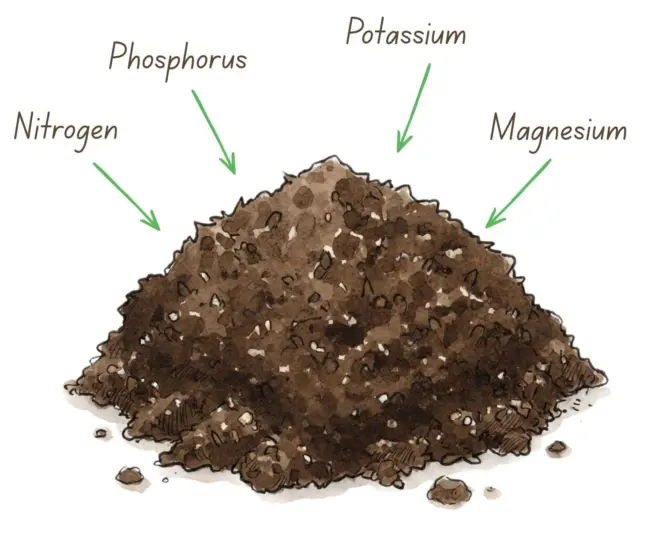
Topsoil is naturally rich in essential nutrients such as nitrogen, phosphorus, potassium, and magnesium. Nitrogen encourages healthy leaf and shoot growth, while phosphorus supports strong root development. Potassium helps your lawn cope with stress, and magnesium plays an important role in photosynthesis, helping your turf develop those lush, green leaves.
When preparing your ground for new turf, make sure to incorporate topsoil into the existing soil for best results rather than just laying it on top. For step-by-step instructions on how to do this, make sure to read our ‘How to Lay Turf: The Ultimate Guide’.
2. Improves Drainage and Airflow
If you have heavily compacted soil, it may be difficult for air, water, and nutrients to reach your new turf’s roots. This happens because the soil particles are tightly pressed together, leaving very little space for these to move around. Heavily compacted soil is also more likely to get waterlogged. If this happens regularly, it can cause a range of problems, from algae and moss to fungal diseases. In severe cases, the soil can become hard to the point where your turf’s roots simply cannot penetrate it.
This is another way topsoil can benefit your lawn. When used as part of a top dressing, it helps improve the structure of the soil over time, creating better drainage and airflow. Healthier soil structure encourages deeper root growth, improves your lawn's resilience during dry weather, and creates better growing conditions for healthy grass.
To make a top dressing, simply mix three parts sharp sand, six parts topsoil, and one part peat-free compost. Then, use the back of a metal rake to work the dressing in, aiming to apply around 2-4 kg of the mixture per square metre.
Before applying, make sure to aerate the area first. This will create small holes throughout the soil, allowing the top dressing to work its way into the ground and helping to reduce future compaction.
3. Creates a Level Canvas
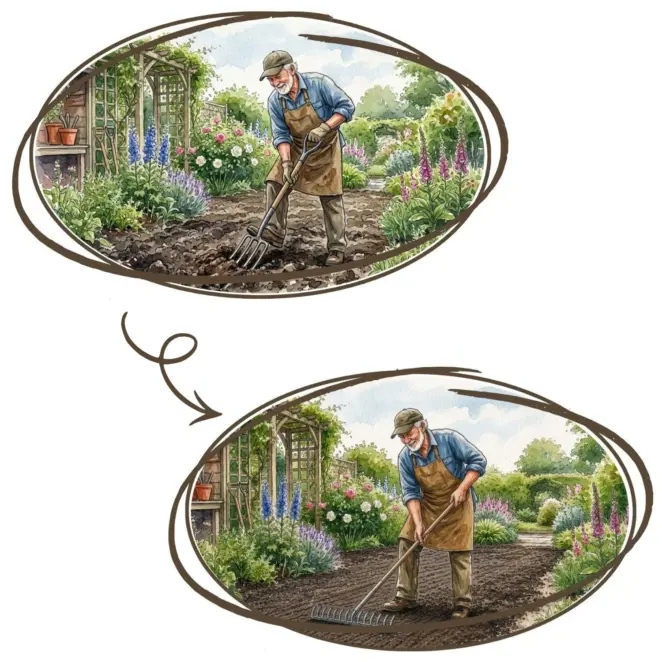
Topsoil can also help create a level surface before laying new turf. By filling in low spots and smoothing out small bumps, it gives your lawn an even foundation to root into.
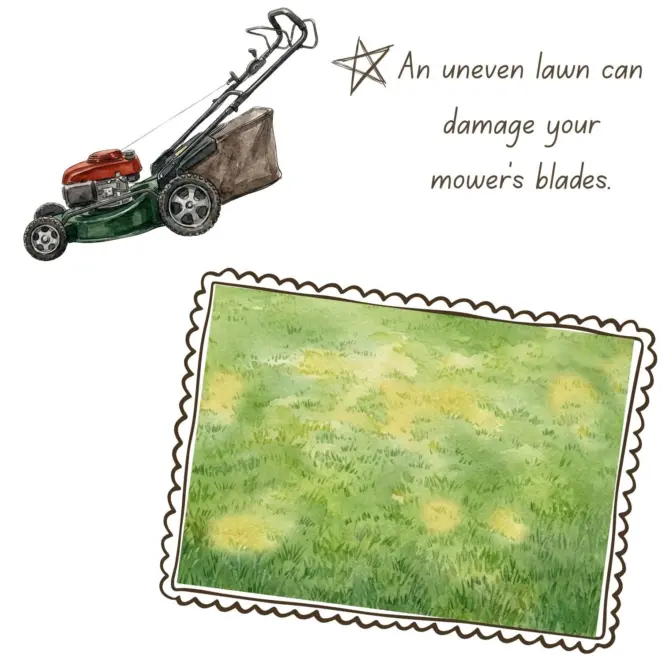
Not only does this make your turf look like it was laid by a professional, giving you that aesthetic benefit, but it will also be practical later on. An uneven lawn can make it difficult for the mower to maintain a consistent cutting height. As the wheels move over bumps and hollows, the blades rise and fall. This means raised areas are often cut far too short, scalping your lawn. This can also damage your mower, bending the blades and wearing out its deck.
Before laying turf, prepare your top dressing and spread it across any affected areas until the ground is nice and level. Ideally, this should be done with a lawn lute, but you can also use the back of a metal rake if you don't have one. Shallow dips and rises are fine, but make sure not to leave any steep ones behind.
Do I Need to Buy Topsoil Before Turfing?
The answer to the ‘Do I need topsoil for new turf?’ question depends entirely on your current soil’s quality.
If you have loam soil, you may only need to buy topsoil if your ground is uneven or not deep enough. If you’re wondering how deep topsoil should be for turf, 15 cm is enough. This is because loam soil is considered ‘the ideal’ soil type by many due to draining at an ideal rate and having a lot of nutrients.
If you have clay soil, then adding topsoil to improve drainage is definitely a good idea. Clay soil is prone to being compacted, so it can be very difficult for water and nutrients to reach the grass roots, causing stunted growth.
Sandy soils, on the other hand, drain too quickly, and can benefit from added topsoil to increase their nutrient content. If this is not done, your turf may struggle to establish due to nutrient deficiency.
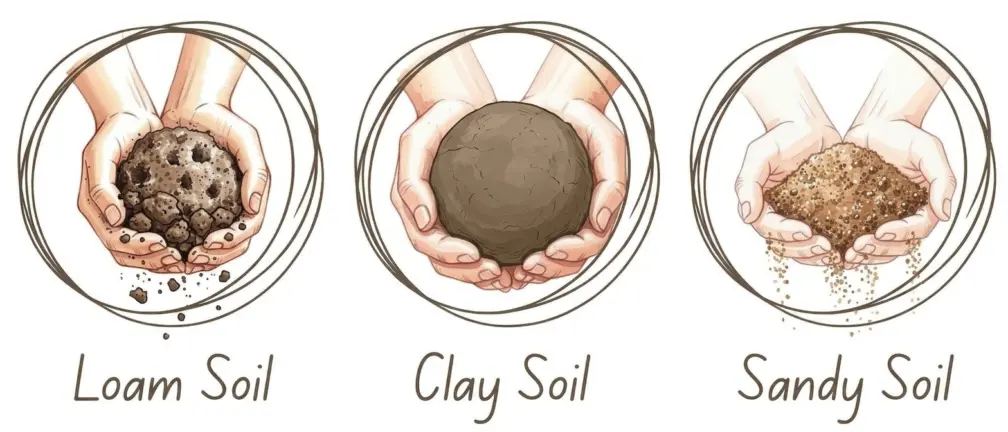
To learn how to check which soil type you have in your garden, make sure to check out our ‘Does Soil Type Affect Turf Laying?’ blog.
How to Calculate Your Topsoil Needs
Once you have established whether your lawn would benefit from topsoil, the next step is to work out how much you need. This will depend on two things: the size of your lawn and the depth of topsoil that you need.
For example, if your lawn currently only has 5 cm of topsoil, you will need to increase it by 10 cm to reach the recommended depth of 15 cm. However, if your lawn already has enough topsoil, but you want to level a few dips, depending on their depth, you may only need 2.5 cm to 5 cm of topsoil.
Before placing your order, always measure your lawn carefully and calculate the required volume based on the depth you need. Our Topsoil Calculator makes this quick and easy, helping you order the right amount without paying for more than you need.
If you’re still wondering whether topsoil is worth investing in, the answer is a resounding yes. Good-quality topsoil will give your lawn a strong foundation, helping it establish successfully and thrive for years to come.
Are you ready to transform your garden? Check out our Enriched Topsoil today and give your lawn the best possible start.
