

Renovating vs. Replacing: When Is Your Lawn Beyond Saving
Is your lawn full of bare patches, weeds, moss, or pests?
If so, you may be asking yourself a simple question: when is a lawn beyond saving? In other words, you are already weighing up renovating vs replacing your lawn.
Renovating is a great option if your lawn’s condition isn’t too bad. However, for seriously damaged lawns, it can take a lot of time and cost a lot of money, without spectacular results, and any improvement may only be temporary.
Here at Online Turf, we have grown our own premium turf for over 20 years and have put together all the information you need to make the right decision for your outdoor space.
How to Assess Your Lawn's Health
If you are wondering when to replace turf, take some time to assess its overall condition.
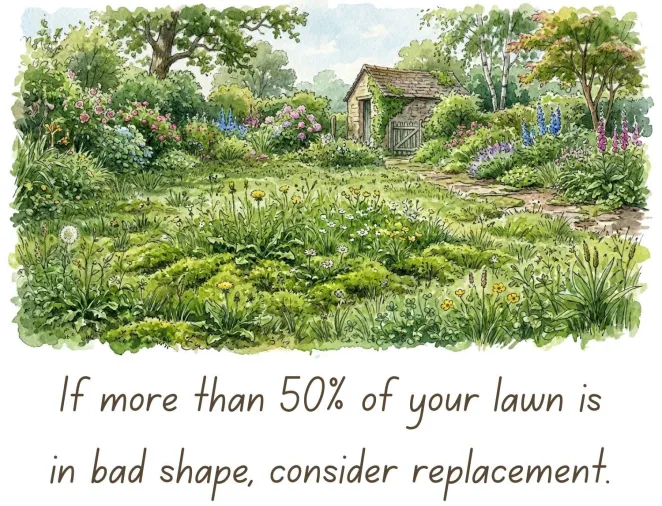
As a general rule, if more than 50% of your lawn is covered in moss, weeds, bare patches, disease, or pests, or if the soil is heavily compacted, replacing it is often the best long-term option. Otherwise, you may spend a lot of time and money on maintenance without seeing real improvement. Any results may also be short-lived, with the lawn quickly returning to its previous state.
Lawns that are heavily affected by weeds and moss do not offer that tidy, manicured look. At the same time, established weeds and moss may be tough for herbicides or natural methods to handle.
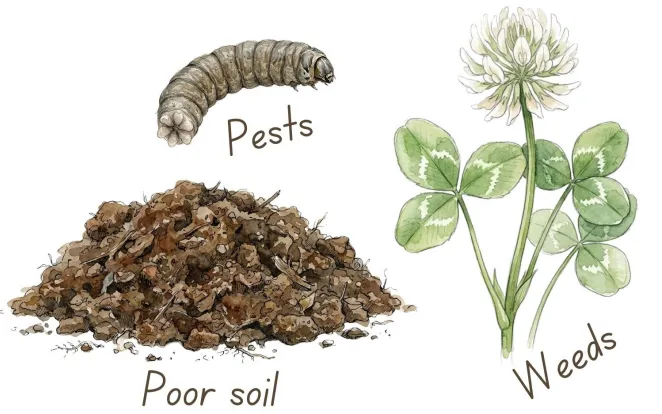
On a similar note, lawn diseases and pests spread quickly. If they have already taken over more than half of your lawn, it will be very difficult to get them under control. They can also damage the roots and weaken the structure of the turf, making recovery much harder.
Large bare patches with no signs of regrowth are another sign that replacement may be the best option. It is likely that your grass has experienced disease in the past and has never recovered fully.
Poor soil is another key factor. If water sits on the surface for days after rain and any past repairs have failed, it may be better to remove the lawn, improve the soil, and start again.
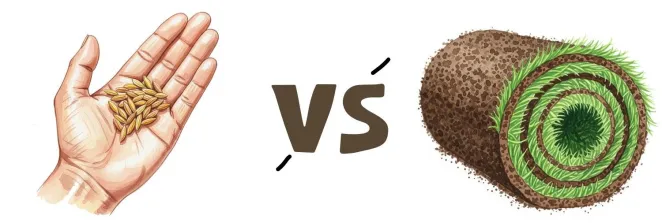
Once you have considered all of these points, you can decide whether overseeding vs re-turfing is the right choice for your garden.
The Pros and Cons of Renovation
Renovating your lawn has both advantages and limitations.
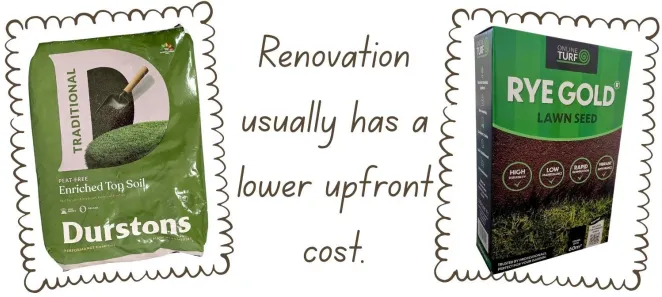
Pros: Renovation usually has a lower upfront cost than fully replacing your lawn, as you are working with the existing turf. In many cases, you only need to buy materials such as topsoil and grass seed. It also requires less physical effort, since there is no need to remove and dispose of old turf before starting.
Cons: The results are not immediate. It can take several weeks or even months before you see clear improvement. In some cases, the lawn may also decline again if the soil structure is poor. This means the time and effort spent may not always deliver long-lasting results.
Route 2: Starting Fresh
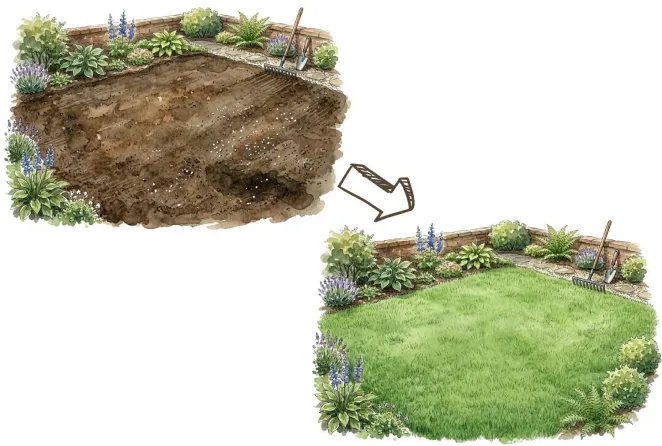
If your old lawn is beyond saving and you want to start anew, the best way to do this is by laying new turf.
The very first step is to remove any old turf using either a spade or a turf cutter. New turf needs to have direct contact with the soil to establish properly, something a layer of old lawn will prevent. Weeds must be cleared too, as they will likely compete with your new grass for nutrients, water, and sunlight, negatively impacting its health.
Route 1: Renovating Your Existing Lawn
If you have decided to give your turf another chance, you may be wondering how to fix a damaged lawn effectively.
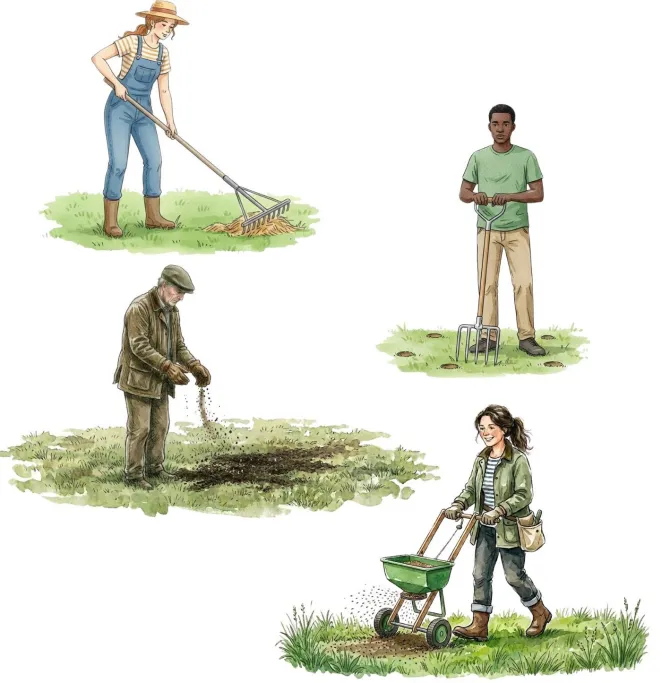
The first step is scarifying. Scarifying is a maintenance technique that involves removing excessive thatch from your lawn, as too much of it can prevent water and nutrients from reaching the soil. Once it is reduced, the lawn is in a better position to recover.
Next is aeration, which helps break up compacted soil. This process creates small holes in the ground, allowing air, water, and nutrients to reach the grass roots more easily. For lightly compacted soil, spike aeration may be enough, while heavily compacted lawns will benefit more from plug aeration. For a step-by-step guide, see our ‘Lawn Aeration and Scarification: The Ultimate Guide’.
After this, spread a thin layer of some good-quality topsoil and grass seed to give your lawn that final boost. We recommend our Enriched Topsoil to improve soil structure and support better seed-to-soil contact when overseeding.
Then apply grass seed at around 20 grams per square metre. This helps fill in bare patches and thinning areas, creating a denser, stronger lawn that is more resistant to weeds, moss, diseases, and pests. Rye Gold Lawn Grass Seed is a strong option for this as it is designed to thrive in UK conditions and maintain a rich green colour throughout the year.
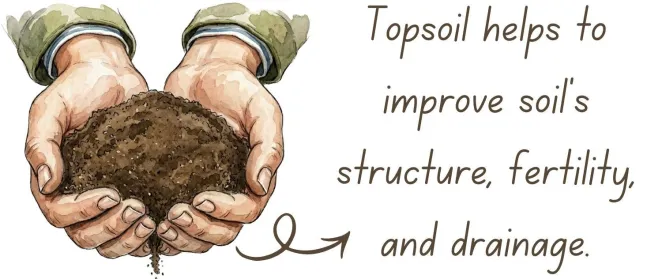
Once the old lawn has been removed, the soil should be turned over to a depth of around 15cm using a spade or powered cultivator. At this stage, adding fresh topsoil can help improve soil structure, fertility, and drainage, creating a stronger base for new turf. The area can then be raked level, and any soft patches can be firmed by gently walking over the surface before raking again.
Finally, the new turf can be laid. To learn how to do this, visit our ‘How to Lay Turf: The Ultimate Guide’.
The Pros and Cons of Replacing
Just like renovating your lawn, completely replacing it also has both pros and cons.
Pros: One of the biggest advantages of replacing your lawn with fresh turf is the instant result. Laying turf immediately transforms your outdoor space, creating a fresh, even lawn that’s free of weeds, moss, pests, and diseases, making it easier to maintain. The lawn also takes little time to establish, usually 4-6 weeks depending on the weather, so you don’t have to wait for ages before you can use it again. Seeds, on the other hand, can take up to 6 months to establish.
Cons: Starting again can be more expensive. This is especially true if you are dealing with a larger area, as you may need to hire a turf cutter to remove the old lawn and then order new turf. This can increase the initial cost, particularly for larger projects, but it often results in a faster and more reliable outcome.
Which is Right for You?
While it may be tempting to just ask yourself, ‘is it cheaper to seed or turf a lawn?’, and go with the cheapest answer, the right decision ultimately comes down to your lawn’s condition.
In most cases, the upfront cost of replacing a lawn is higher than trying to improve an existing one. Simple renovation methods, such as feeding or overseeding, are usually more affordable in the short term and can be effective for lawns that are still in reasonable condition.
However, if a lawn is severely damaged, heavily weeded, or has poor soil structure, these treatments may only offer limited or temporary improvement. It is more likely that replacement becomes the better option when the lawn is beyond repair and you are looking for an immediate result.
Choose renovation if:
- Your lawn still has a solid base of more than 50% healthy grass.
- The soil structure is generally good.
- You are happy to wait for gradual improvement.
Choose replacement if:
- More than half of your lawn is covered in weeds, moss, pests, diseases, or bare patches.
- The soil quality is poor and you want to correct it.
- You want an instant result.
- Previous repair attempts have failed.
Are You Ready for a Fresh Start?
Once you have decided whether repairing or replacing your lawn is the right choice for your outdoor space, the next step is to choose the right products.
Here at Online Turf, we have been growing our own turf for over 20 years. Every single turf roll we sell is freshly cut to order, and you also get a next-working-day-delivery on orders placed before 2pm. Our range includes three different products, including Rye Gold Turf, Stadium Turf, and Budget Turf. They all use specific seed blends to make sure that each of our customers can find something that truly works for them and their needs.
- Rye Gold Turf is our most premium and best-selling option, designed to give your garden a polished, professional look.
- Stadium Turf is perfect if you are looking for turf that your children and pets can play on without holding back.
- Budget Turf provides a practical, affordable solution for larger areas without compromising on quality.
For an easy repair, we also offer Rye Gold Lawn Seed. Made from the same high-quality mix of perennial ryegrass and red fescue as our best-selling Rye Gold Turf, it is designed to deliver professional results. It can handle heavy foot traffic, grow well in shade, and keep its rich green colour all year round.
To support both renovation and replacement projects, we also supply topsoil and compost, helping you create the right foundation for healthy growth.
To learn more, check out ‘A Beginner’s Guide to Online Turf Products’.
Give your garden the upgrade it deserves. Whether you are renovating or starting anew, visit our product page to find everything you need!
FAQs
How Long Does a Lawn Last?
If you take care of your lawn properly, it can last forever.
This should include regular mowing, feeding, scarifying, aerating, and overseeding when needed. These jobs will help keep the grass healthy and encourage it to continually regenerate.
However, if you neglect your lawn, over time it can become weak, thin, and more vulnerable to weeds, moss, pests, and disease. If these issues are not addressed and end up covering more than 50% of your lawn, you might want to consider replacing it.
Keeping up with regular lawn care and addressing problems as they appear is the best way to help ensure that you enjoy your lawn for many years to come.
