


Preparing Your Lawn for Climate Change
As the UK weather becomes more unpredictable, with wetter winters and hotter summers, our lawns are having to cope with more challenging conditions. Long periods of heat and drought can leave your grass looking dry and brown, while heavy rainfall can leave your soil waterlogged.
The good news is that you don't have to wait for extreme weather to take its toll. By preparing your lawn in advance and adapting your usual lawn care routine, you can give your grass a stronger foundation to cope with both of these extremes.
Here at Online Turf, we've been growing our own turf for over two decades, so we know what it takes to grow a healthy, resilient lawn. From improving drainage before the wetter months to encouraging deeper roots ahead of summer, there are several simple steps you can take to help your lawn withstand changing weather and recover more quickly.
The Changing UK Climate
The UK climate is changing, and our lawns are having to cope with increasingly unpredictable weather.
With the current global warming, wetter and warmer winters are slowly becoming the norm. According to the BBC, ‘Areas across the UK from Cornwall to County Down have seen their wettest January on record’ this year.
The last few years have seen longer, drier spells too, with summer 2026 currently on course to be the UK’s hottest on record. On top of this, according to the Met Office, ‘England and Wales have provisionally recorded their driest July on record, with Southern England seeing its driest month ever recorded’.


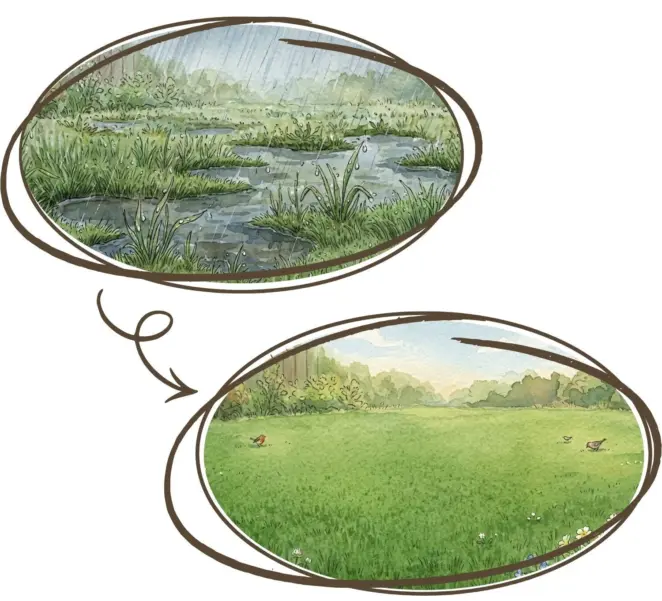
For your lawn, long periods without rain can quickly dry out the soil. This can cause grass to lose its colour and become stressed. When heavy rainfall eventually arrives, compacted or poorly drained soil may struggle to absorb the water. This can leave the lawn saturated and potentially waterlogged.
This is why preparing your lawn for hotter summers and wetter winters is so important. A climate change-inclusive lawn care routine can help your grass recover more quickly and keep your outdoor space looking its best for years to come.
How to Survive Wetter Winters
1. Beat the Bog with Aeration
Your lawn has probably seen a lot of heavy foot traffic over the summer. This can compact the soil, making it harder for water to drain properly. With the increased showers that winters now tend to bring, this can lead to waterlogging. Waterlogging can cause a number of issues for your lawn, including the development of bare patches, which can then be taken over by weeds, moss, algae, lichens, liverworts, and diseases. Prolonged waterlogging can also cause your grass roots to drown.

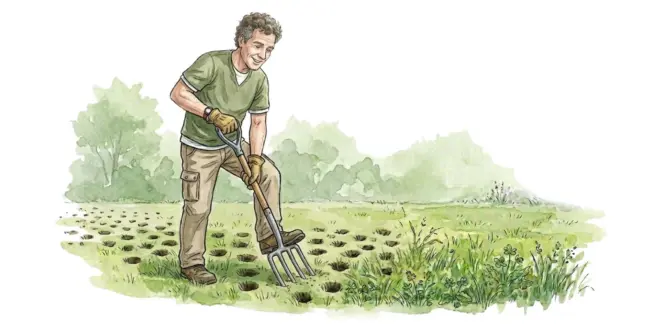
If you’re wondering how to fix a waterlogged lawn, add aeration to your autumn lawn care routine. Aeration is the process of making small holes in the soil to break up compaction and allow water to drain away more easily, preventing waterlogging. It also allows more oxygen and nutrients to reach the roots, strengthening them before winter.
For best results, aeration should be done when the soil is slightly moist, but not saturated. If your soil is currently waterlogged, walking on it will only make the problem worse. Only start repairs once the lawn has drained and is no longer waterlogged. You should also wait until the lawn is at least six months old before aerating it.
2. Improve Drainage with Quality Top Dressing
If you’re wondering how to stop your lawn from flooding in winter, improving your soil’s drainage is a good place to start. One way to do this is by top dressing your lawn.
In simple terms, top dressing involves spreading a thin layer of top dressing over an existing lawn without burying the grass. To make your own mix, combine three parts sharp sand, six parts topsoil and one part peat-free compost, then spread it evenly across your lawn after aerating. Depending on your soil type, you may want to slightly adjust this ratio. For example, heavy clay soils may benefit from more sand to improve drainage, while sandy soils could benefit from a higher proportion of topsoil.
The mixture will fill the holes created during aeration, helping to keep them open so that rainwater can move more easily through the soil.
To learn more, check out our ‘Guide to Top Dressing Your Lawn’.

How to Thrive in Hotter Summers
Here are some things you can do to prepare your lawn for hot summers:

1. Train Your Roots to Grow Deeper
If you’re wondering how to train grass roots to grow deeper, the secret is watering your lawn correctly.
Light and frequent watering trains your grass roots to stay near the surface. This is because the moisture only reaches the top layer of the soil. Once summer arrives, this top layer can dry out quickly, making your lawn more vulnerable to drought and stress.
In comparison, watering deeply and infrequently allows moisture to penetrate deeper into the soil, encouraging the roots to grow deeper too. As a result, you get more drought-resistant grass, as the roots can reach moisture stored further down in the soil. This gives your lawn a more reliable water supply during dry spells. It can also help your turf stay healthier and recover more quickly from drought stress.
2. Raise Your Mower's Blades
As soon as you can see that hotter temperatures are forecast, raise your mower's blades. Doing this allows your grass blades to have a bigger leaf area, helping them produce more energy through photosynthesis.
Longer grass blades also shade the soil, keeping it cooler and reducing water evaporation. This helps your turf withstand prolonged periods of high temperatures.
If you don’t raise your cutting height, the sun can bake the soil dry, placing extra stress on the lawn and increasing the risk of scorching.
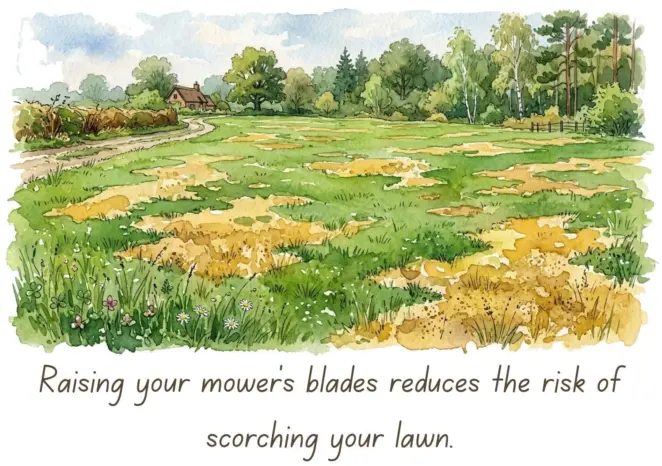

For best results, aim to keep your grass blades at 2 to 3 inches tall and never take more than one-third off the grass height in a single mow.
For example, if your grass has reached 3 inches over winter, do not cut more than 1 inch off in one go. Cutting it down further can scalp the lawn, making it more susceptible to disease and weeds.
Choosing a Resilient Grass Type
While it is important to prepare your lawn for changing weather, some grass types are naturally better suited to challenging conditions. Choosing a resilient turf blend can make maintenance much easier, as it can help your lawn recover more effectively after periods of heat, drought, or heavy rainfall.
Some of the best grass types for these conditions include those that contain a blend of perennial ryegrass and red fescues.
Perennial ryegrass is well known for its durability, making it a great choice for areas that experience heavy foot traffic. It also recovers quickly after damage and needs very little care to do so. For this reason, it is a popular choice for busy gardens and sports pitches.
Red fescues, on the other hand, are a great addition to a turf blend. They have fine leaves that create a luxurious appearance and are also more tolerant of shade.
This combination offers both aesthetic benefits and the ability to recover from challenging weather.
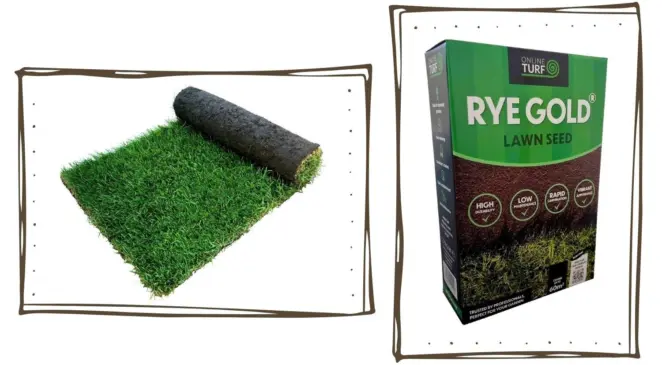
Here at Online Turf, we offer three different turf blends that use these grass types:
- Rye Gold Turf is our most premium and best-selling option, designed to give your garden a polished, professional look.
- Stadium Turf is perfect if you are looking for turf that your children and pets can play on without holding back.
- Budget Turf provides a practical, affordable solution for larger areas without compromising on quality.
If you’re looking for the best grass seed for hot, dry summers, we also offer Rye Gold Lawn Seed. It’s made from the same high-quality blend as our Rye Gold Turf, making it a great choice for making your current lawn stronger and repairing worn or patchy areas.
Start Future-Proofing Your Garden Today
While you can’t control the weather, you can control how well your lawn is prepared for it. Improving drainage before winter can help prevent waterlogging. Raising your mowing height and encouraging deeper roots before summer can also help your lawn recover more quickly from challenging conditions. Choosing a turf made from a resilient blend can also give your lawn a strong foundation for the years ahead, helping it to better cope with the changing UK climate.
Are you ready to future-proof your garden? Explore our full range of turf and grass seed today and give your lawn a stronger start for whatever the weather brings.
