

Why Your Robot Mower Demands a Level Lawn
Have you thought about getting a robot mower to make your lawn maintenance easier, but are wondering whether your lawn is too bumpy for one?
It is true that as the technology improves, many models can now handle slightly uneven ground. However, bumps, dips and ruts can still cause problems. Your mower may scalp the grass, get stuck or miss certain areas.
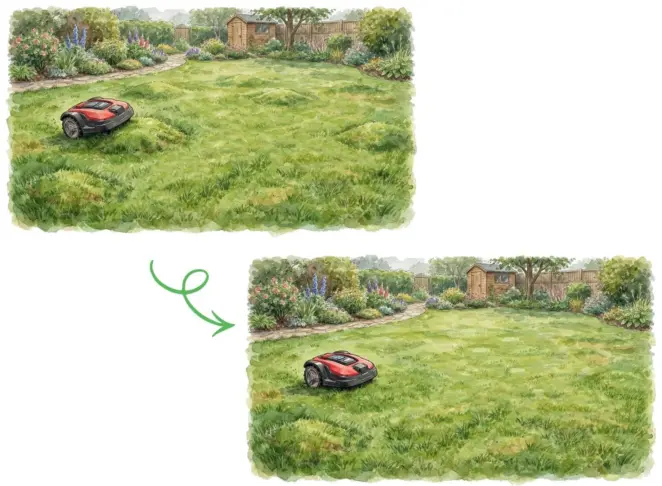
If you want to get the most out of your investment and make sure your lawn is looking its best, creating a level lawn for your robot mower is essential. Depending on the state of your lawn, this can involve adding some topsoil, using the peel and patch method, or, if your lawn is extremely uneven, starting again.
When High-Tech Meets Hard Ground
One of the biggest advantages of using a robot mower is its convenience. It can maintain your lawn with very little effort compared to traditional mowing.
Depending on your preference, you can choose a model that uses perimeter wire, GPS, cameras, or LiDAR. This allows you to choose one that works for your space and its layout. Once set up, it moves around your garden on its own, cutting the grass regularly without you having to push the mower yourself. This makes it a great solution for busy people, those with physical difficulties, or anyone who doesn’t enjoy mowing their lawn.
However, this convenience also comes with a few limitations. When using a traditional mower, you can use your judgement to lift the machine higher when going over a raised lump or steer out of a deep hollow. When using a robot mower, you have to rely on its own judgement, which may not always be as accurate as yours. This is why it is so important to prepare your lawn beforehand. A level surface makes the job much easier for your robot mower.
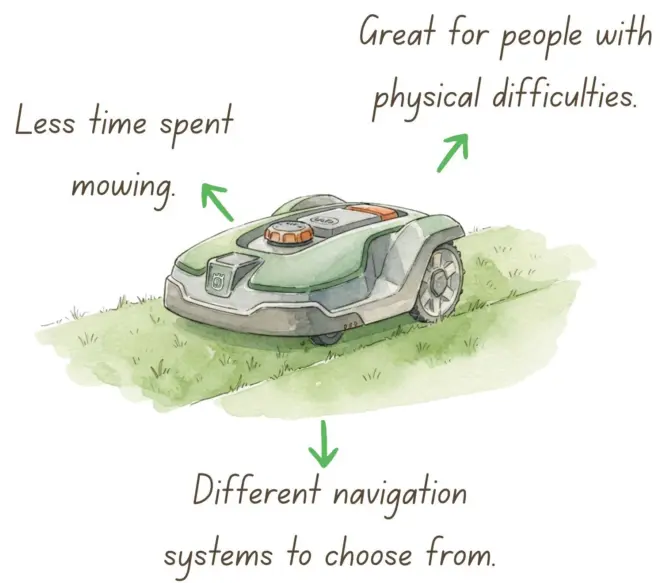
Why Bumps and Dips Are a Robot's Worst Enemy
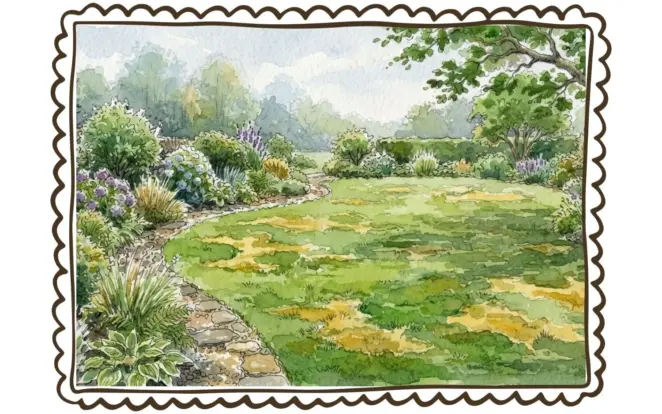
Scalping the Grass
Bumps and dips may lead to your lawn mower scalping grass.
This happens when the machine struggles to maintain a consistent cutting height. Its deck may tilt as it moves over uneven ground, producing irregular results. As a result, you may find that higher spots may be left uncut, while any lower sections could be scalped. The inconsistency can make your garden look messy and unkempt. It can also weaken your turf, making it more susceptible to weeds and diseases. The scalped areas can also turn yellow or brown in appearance.
Some advanced models have floating decks and other features that can help them adjust to uneven terrain. However, keeping your lawn as level as possible will help your mower maintain a more consistent cutting height and give you a much neater finish.
Getting Stuck in Ruts
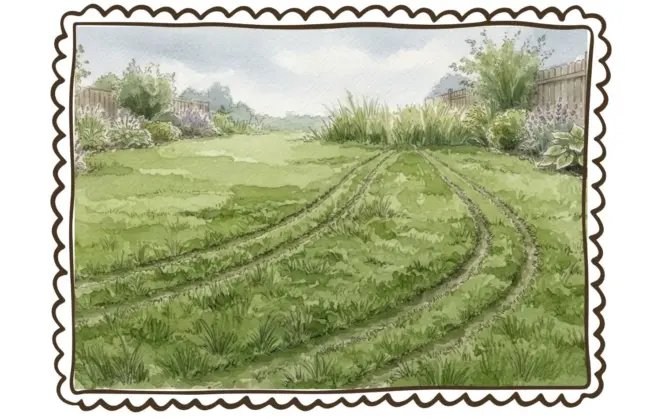
Ruts can form in a few different ways including mowing your lawn the same way every time, driving heavy machinery on it, and poor drainage.
The small wheels of the robot lawn mower can easily get trapped in them if they are deep enough, especially if the ground is still soft from the rain. The wheels might be slipping on the wet grass and soil, struggling to get enough traction to climb out, spinning in one spot. Not only can this prevent it from completing its route and leave your garden unfinished, but the repeated attempts and the friction they cause could possibly damage the grass underneath. This can contribute to bare patches and make the existing ruts even worse.
How to Level Your Lawn for Automated Mowing
If you think that the answer to the ‘Is my lawn too bumpy?’ question is a yes, here’s how to level a lawn in the UK and solve this problem:
Fixing Shallow Dips with Topsoil
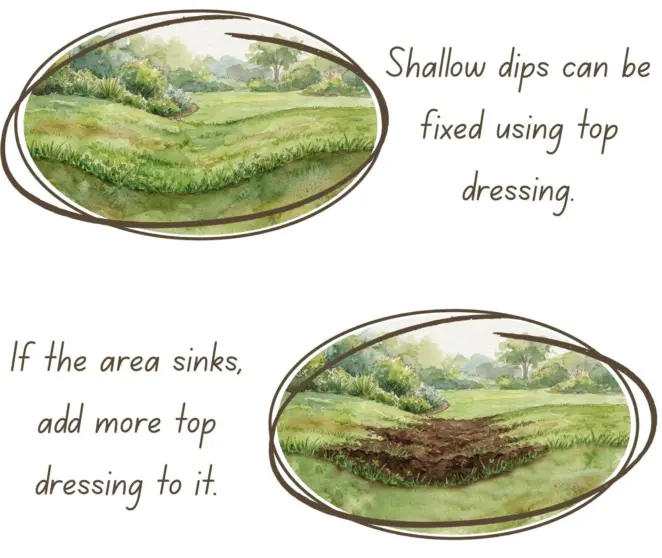
If your lawn only has shallow bumps, rather than deeper holes, you can use top-dressing to even those out.
Top dressing is usually made from three parts sharp sand, six parts topsoil, and one part peat-free compost, but the exact ratio should depend on your soil’s structure. If you are looking for topsoil for levelling a lawn, our Enriched Topsoil is a great choice. It contains sterilised loam and added organic matter, making it the perfect choice to give your lawn a little boost. At the same time, its peat-free formula is a more environmentally friendly alternative to peat-based products.
Once you have made your mixture, apply it to the dip using a shovel then smooth it out using the back of a metal rake or a lawn levelling rake. Firm the area gently and repeat this process until the dip is gone. You should then allow any areas you fixed to settle, and if the area sinks, add more top dressing to it.
For best results, spread good-quality grass seed, such as our Rye Gold Lawn Grass Seed, on the areas that you treated afterwards. This will fill in any bare or thinned spots and block weeds.
Repairing Deep Ruts (The Peel and Patch)
For deep ruts and dips, the best thing to do is to add the top dressing mixture underneath the turf, provided the grass is healthy enough to lift and replace.
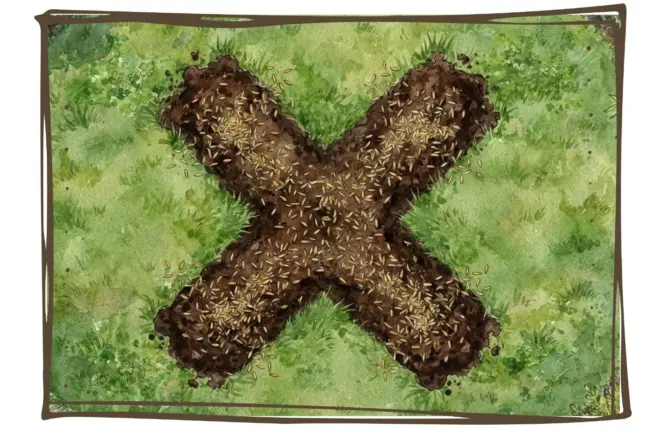
Start by watering the area a few hours in advance. This will prevent your turf from breaking apart when you try to lift it. Then, use a shovel to cut a cross in your grass over the dip and lift the turf, creating a flap that you can pull back.
At this stage, remove any stones visible in the exposed soil and add the mixture into the dip. Water the area, add more mixture as needed, smooth it out, and put the turf back. To make sure that the cross marks are not visible, fill these with topsoil and overseed them with grass seed.
If the grass is too damaged to lift and replace, you may be better off removing it completely, filling the rut with the top-dressing mixture, levelling the surface and overseeding with grass seed.
Levelling Raised Lumps
Any raised areas can also be a problem and shouldn’t be ignored.
To level these, you’ll need to remove excess soil from underneath your turf.
Lift the turf following the same process as you would for a rut - cut the turf open using a shovel, create a flap you can pull back, and remove any extra soil. Once this is done, firm the ground gently and check that it sits level with the surrounding lawn.
Put the turf back and overseed the cut marks so that they can blend in with your lawn.
Starting Fresh: The Ultimate Level Lawn
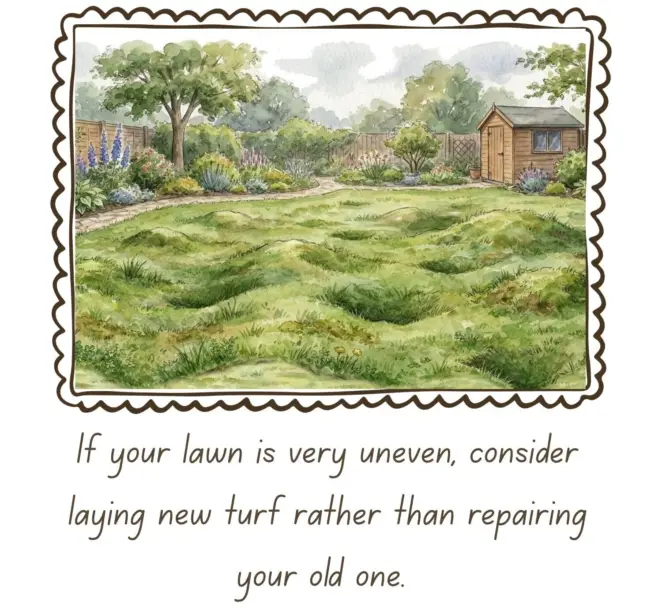
If most of your lawn is heavily bumpy with deep dips and slopes, trying to level it may not be the best option. This is because repairing it section by section can take a long time and it might take a few years before you achieve a consistently level finish.
Instead, laying new turf can be a quicker way to achieve the results that you’re looking for.
You should never lay your new turf onto your already existing lawn, so the first step should be to remove any grass that you currently have. This can be done by cutting it into squares, inserting the spade underneath, and lifting it away.
You should spend some time levelling the ground to give your future lawn a suitable foundation. Our Enriched Topsoil is the perfect product to assist you with this. Laying turf on uneven ground is not going to solve the problem, leaving your future lawn full of bumps and dips, making it harder for the robot lawn mower.
Once this is done, you should lay out your turf.
For step-by-step instructions on how to do this, read our ‘How to Lay Turf: The Ultimate Guide’.
Choosing the Right Grass for Daily Mowing
Unlike traditional mowing that’s usually done once a week or every couple of weeks, depending on how quickly your grass grows, robot mowers cut the grass little and often. It is not uncommon for them to be mowing your lawn a few times a week or even daily in the peak growing season.
As a result, you need turf that’s able to cope with regular mowing and everyday use. If you are looking for the best grass rolls for robot mowers, our Rye Gold Turf is an excellent choice for this. Its unique blend contains perennial ryegrass, which is one of the most adaptable and durable grass types, allowing it to thrive in the British weather and high-traffic areas.
At the same time, two varieties of red fescue improve its shade tolerance and can spread gradually via underground rhizomes. This helps to fill in any gaps, keeping the turf looking beautiful and dense.
To learn more, make sure to read our ‘Why Rye Gold Turf Is Great for Your Garden’ blog.
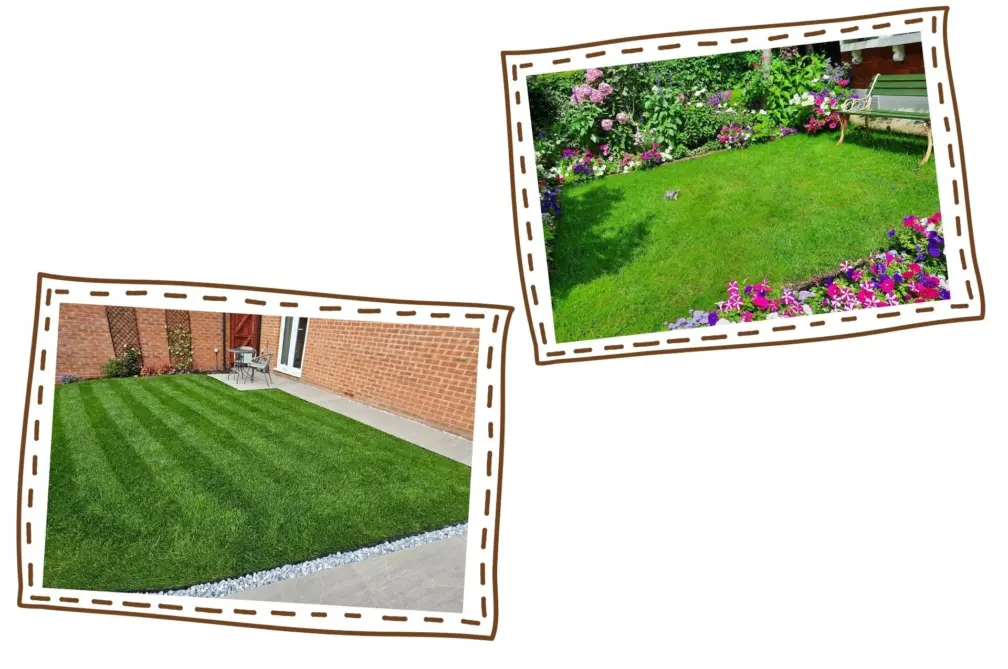
Levelling your lawn can help you get the best results from your robot mower. For shallow dips, this can include adding some top dressing on top, while deeper ruts may require you to cut the turf open and put the mixture underneath instead. Raised bumps may require you to remove some of the excess soil, allowing you to create an even canvas for your robot mower.
Are you ready to level your lawn? From topsoil to grass seed and turf, explore our product range to find everything that you need.
Before buying your turf, make sure to check out our turf calculator to see how much you should order.
