


How to Thicken a Thin Lawn by Overseeding
Is your lawn looking tired, patchy, or worn out?
If so, you might be wondering how to thicken a thin lawn and restore it to that healthy, lush appearance.
One of the best ways to do this is by overseeding. Not only does it create a denser and stronger lawn, but it also makes it more resistant to weeds, moss, diseases, and pests.
From understanding why your lawn is thinning to learning what overseeding is, why it works, and how to do it, we have put together all the information you need to get your garden back on track.
Why Is My Lawn Thinning?
There are multiple reasons why your lawn may be thinning and developing bare patches.
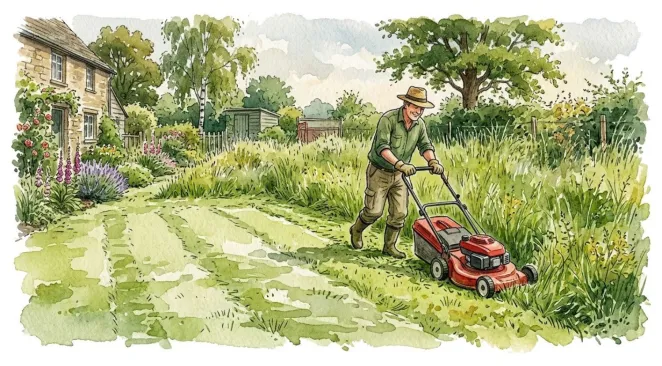
Starting with improper mowing practices: if you regularly take off more than one-third of the grass height in one go, you can scalp the lawn and stress the turf. The reduced leaf area makes it harder for the grass to photosynthesise, weakening it and causing it to thin. It also leaves your turf more susceptible to diseases and weeds.
Constant walking or playing on your lawn can also wear it out while compacting the soil underneath. Compacted soil makes it harder for water, air, and nutrients to reach the grass roots, causing bare or patchy areas to develop.
If you have pets that regularly urinate on your lawn, this could be another cause. Animal urine is high in nitrogen and, if not diluted with water afterwards, it can burn your lawn. This can leave your turf with patches of dead grass, making it look uneven and sparse.
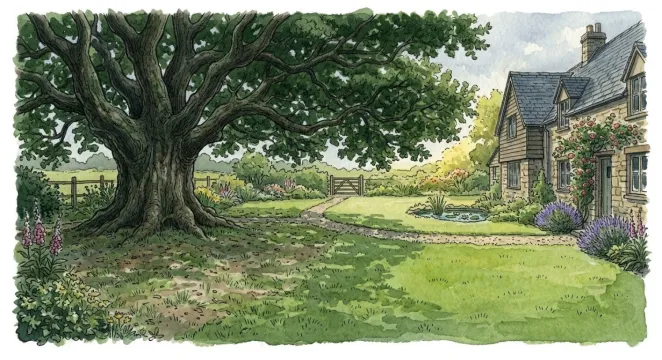
Too much shade can also cause your lawn to thin, as the grass does not get enough sunlight needed for photosynthesis. To avoid this, make sure your turf receives at least 4 hours of direct sunlight per day.
Sometimes, however, you can be doing everything right and your grass may still become thinner over time. This is because, just like any other plant, grass plants age and die over time.
What is Overseeding?
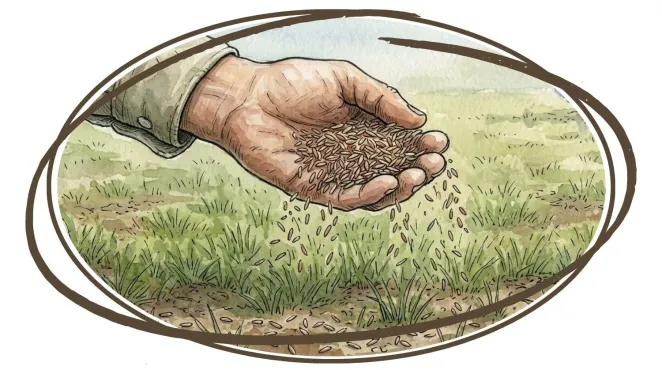
Overseeding is a lawn maintenance method that involves sowing grass seed directly over an established lawn. It is one of the best ways of repairing bare patches in a lawn and restoring a thick, healthy appearance without having to tear up what is already there. It can also introduce new grass varieties into your turf, helping to improve its resistance to weeds, pests, and diseases.
If you are wondering when to overseed a lawn in the UK, spring and autumn are usually the best times to do it. During these seasons, the soil tends to be warm and moist while temperatures are still mild. This increases germination rates and allows new seedlings to establish before facing summer heat or winter frost.
Step 1: The Prep Work (Mow and Scarify)
Whether overseeding is successful hugely depends on the prep work that you have done beforehand. Seeds need to have direct contact with soil to germinate. If they are blocked by long grass, thatch, or moss, the chance of them doing so successfully drops significantly.
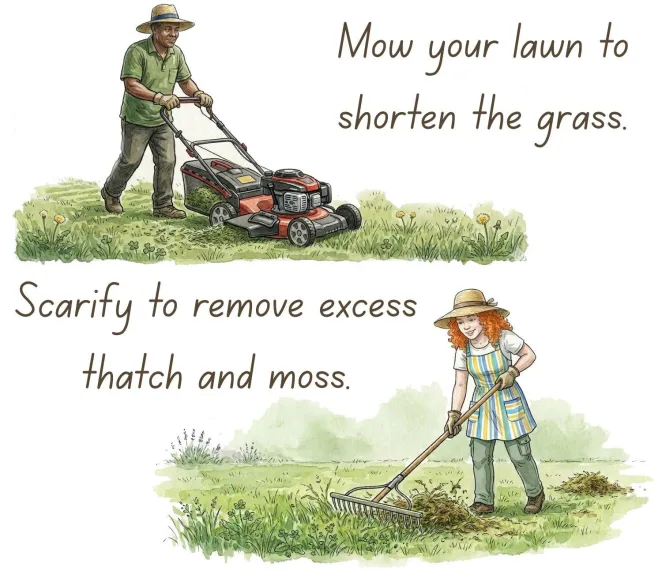
Start with mowing your lawn so that the grass blades are shorter, and then scarify it. Scarification is the process of removing excess thatch and moss from your lawn, as too much of it can create a barrier that prevents sunlight, water, and nutrients from reaching the soil and your grass. For step-by-step instructions on how to do this, read our ‘Lawn Aeration and Scarification: The Ultimate Guide’.
Once done, it will provide the seeds with essential contact with soil, while also reducing the amount of competition that they will receive from your existing lawn. This will make it easier for them to establish.
Step 2: Aerate and Top-Dress
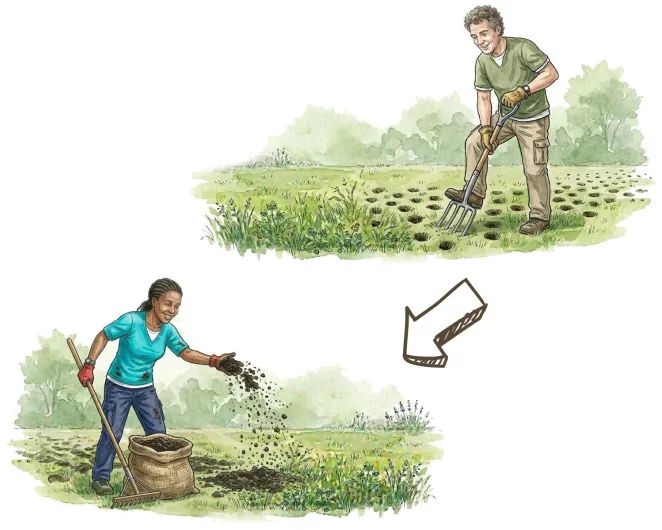
Once you have mowed and scarified your lawn, it is time to aerate it.
Aeration is the process of creating small holes in the ground to break down compacted soil and allow water and nutrients to penetrate more easily. When done before sowing grass seed, it ensures that the soil is soft enough for young seedlings’ roots to grow through, allowing them to establish properly. If the soil is hard and compacted, it will act like a physical barrier, preventing the seedlings from getting the moisture and nutrients they need.
You can then spread a thin layer of good quality topsoil, such as our Enriched Topsoil. Not only will this provide the seeds with a little boost by giving them a nutrient-rich base, but it will also improve soil-to-seed contact.
Step 3: Sowing the Seed
When overseeding a lawn in the UK, it is important to choose the right variety of grass seed so that it can thrive in the British climate while meeting your lawn’s needs.
Grass seed mixes are not all designed the same, and choosing the wrong one can have a major impact on your lawn. For example, if you use a mix that is mainly designed for ornamental lawns and light foot traffic in a busy family garden, it can quickly become worn out and damaged.
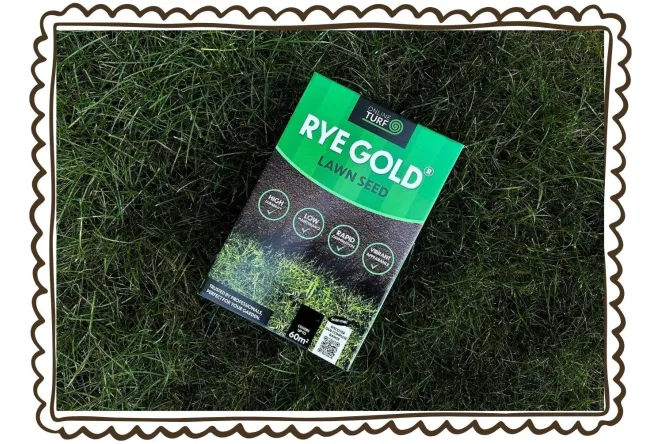
For this reason, we recommend Rye Gold Lawn Grass Seed. It is specifically formulated to flourish in UK conditions, growing in temperatures as low as 7°C and germinating in just a couple of weeks under the right conditions. It also has that professional, polished look while still being durable enough to handle heavy foot traffic, making it one of the best grass seeds for overseeding.
For the best results, overseeding should be done at a rate of around 20 grams per square metre to ensure even coverage. You should also lightly sprinkle some topsoil over the seeds to help protect them from birds and strong winds.
Step 4: The Golden Rule of Aftercare (Watering)
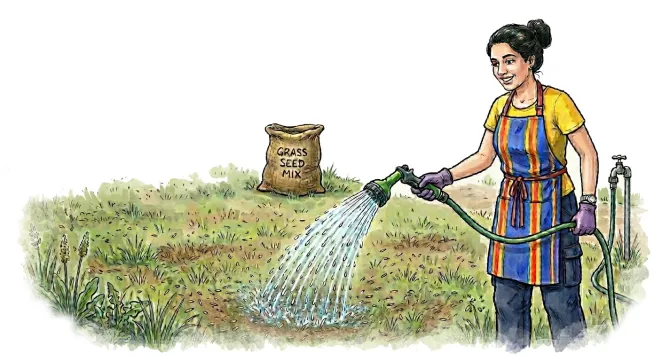
If you want your lawn to achieve that thick, dense look, make sure to water your grass seed correctly once you sow it.
Grass seed needs constant moisture in order to germinate. So, unless the weather does it for you, you need to water it lightly and often so that it is not washed away. This usually works out to once a day during milder weather or twice a day during hotter days until germination.
If the seeds do dry out, they will usually go dormant if they have not yet broken their shell and will only resume germination once consistent moisture is restored, causing delays. If the shell has already opened, the seeds will die and will need to be reseeded.
When is a Lawn Too Thin to Save?
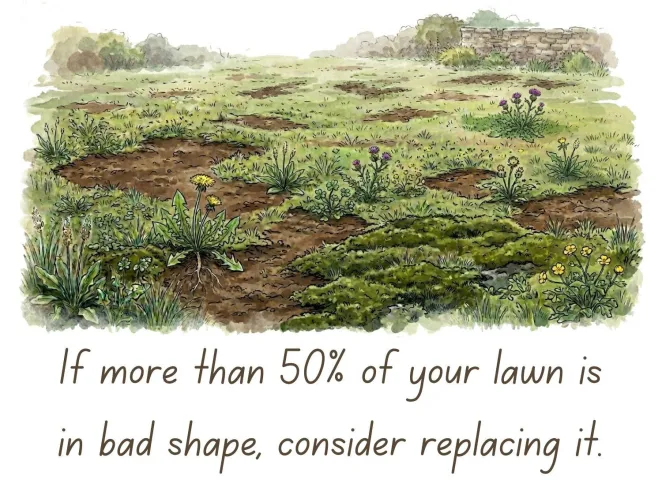
Generally, a lawn is considered too thin to save if more than 50% of it is covered in moss, weeds, bare patches, disease, pests, or if the soil is heavily compacted and you want to correct it. At this stage, there is often not enough healthy grass left to successfully outcompete weeds or support effective recovery through overseeding alone. To learn more about this, visit our ‘Renovating vs. Replacing: When Is Your Lawn Beyond Saving’ blog.
If you do decide to start anew, one of the best ways to do this is by laying high-quality turf, such as our best-selling Rye Gold Turf. Not only will this instantly transform the appearance of your garden by creating a fresh, even lawn that is free from weeds and health issues, but it will also be established and ready to use in as little as 4-6 weeks, depending on the weather. In comparison, if you are wondering ‘how long does grass seed take to grow?’, it can even take up to 6 months for it to establish fully.
Whether you are overseeding your lawn or starting from scratch, Online Turf has everything you need. Explore our full product range today and transform your outdoor space into your own green haven.
