

How to Rejuvenate a Lawn
Are you struggling with a lawn that looks discoloured, thinning, or untidy?
A lawn that doesn’t look its best can make your whole outdoor space feel uninviting and messy. There are many reasons this might happen - from compacted soil to weed infestations or heavy foot traffic.
The good news is that with the right care, your lawn can be restored to its former glory. By understanding why lawns struggle and following our step-by-step rejuvenation techniques, you too can learn how to take care of your lawn like a professional.
Why Does My Lawn Look Unhealthy?
There are several reasons why your lawn can sometimes start to look tired, discoloured, or patchy. Here are the most common ones:
- Compacted soil: Makes it difficult for grass’ roots to reach deeper into the soil, resulting in a shallow root system.
- Thatch build-up: A layer thicker than ½ inch prevents water and nutrients from reaching the soil and your turf’s roots.
- Moss and weeds: Compete with grass for nutrients, water, and sunlight while also giving your lawn an untidy appearance.
- Poor drainage: Can lead to waterlogging, which can result in algae, moss, and fungal diseases developing.
- Nutrient deficiencies: Grass needs the right balance of nutrients to stay green and healthy.
- Heavy foot traffic: Regular, heavy use can cause soil compaction and stress the grass, causing thinning and slow recovery.
- Incorrect mowing: Cutting too short or unevenly can stress the grass, weakening it.
- Pet urine: High-nitrogen spots can burn and discolour grass.
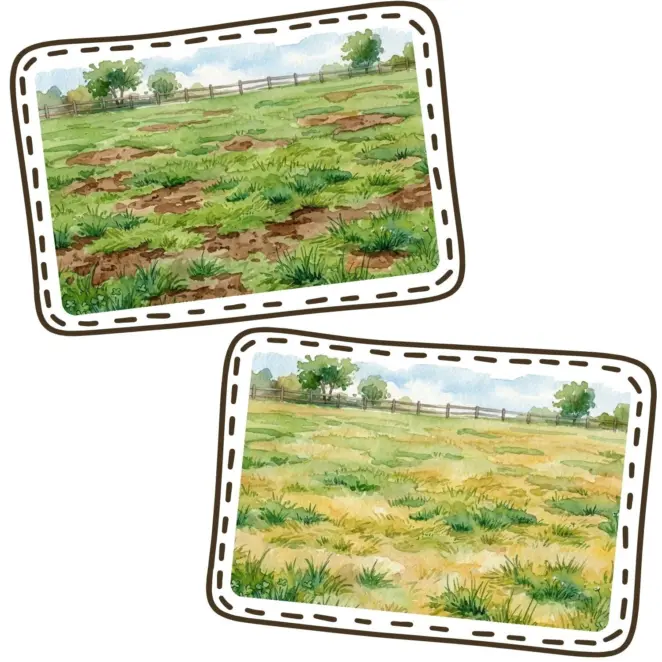
In some cases, an unhealthy-looking lawn can be a sign of disease. If this is the case, your lawn will need a targeted treatment to improve. For more information, check out our ‘Common Lawn Diseases’ blog.
How to Rejuvenate Your Lawn
The best time to rejuvenate a lawn is during spring or early autumn, when temperatures are mild and there is enough moisture for new grass seed to establish. To do this, simply follow our 5-step process.
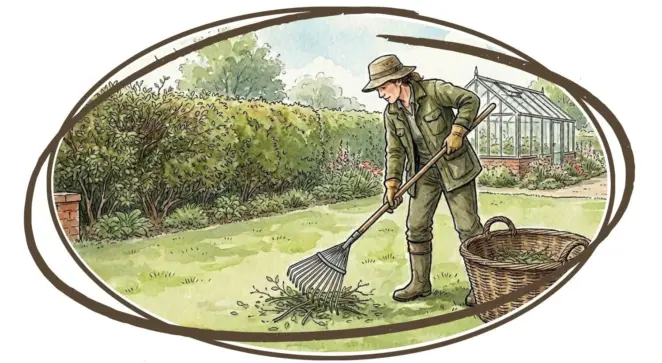
1. Clear Debris
While it may be tempting to simply leave any debris, such as leaves, twigs or hedge trimmings, on your lawn, this can cause a lot of damage. Any leftover debris can block sunlight and air from reaching your grass, causing thinning and yellowing patches. In the worst-case scenario, if the situation is not addressed, it can even cause your grass to die. Damp, compacted debris can also trap moisture against the surface of the lawn, creating the perfect conditions for fungal infections and disease.
This is why you should start your lawn rejuvenation by cleaning it away. This can be done manually, using your hands or a sturdy rake if the amount of debris is small. For larger amounts, consider using a leaf blower or vacuum if you already have one. This is the fastest and most efficient way to clean up your lawn.
Remember, always wear protective gloves when cleaning your lawn to avoid any skin irritation or physical injuries.
2. Remove Weeds and Moss
Not only do weeds and moss make your lawn appear messy and untidy, but they also compete with your grass for sunlight, water and nutrients. If not removed, they will weaken your lawn over time, making it more susceptible to pests and diseases.
There are many different chemicals on the market that you can buy to get rid of both weeds and moss in one go. Here at Online Turf, we recommend the 3-in-1 formulas which kill weeds, moss, and fertilise your lawn all at the same time to keep it green and healthy. However, it is worth noting that simply applying this formula once is likely not going to be enough. Instead, multiple applications may be needed over a few months for your turf to be completely free of weeds and moss.
For best results, follow any instructions given by the manufacturer of the product you purchase. You should then give your lawn a break of around 4-6 weeks to make sure that all the residual chemicals in the soil are gone before moving on to the next step.
3. Scarify
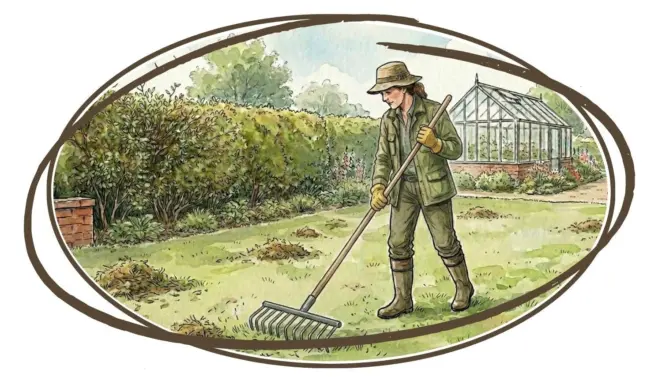
Once your lawn has been cleaned and treated with the correct chemicals, it is time to scarify it.
A thin amount of thatch can be beneficial for your turf, helping your lawn retain moisture and often acting as insulation to protect both the soil and your grass roots. However, if it gets thicker than ½ inch, it can prevent water and nutrients from reaching the soil and your turf’s roots. As a result, your lawn will grow more slowly and become weaker over time, likely developing weeds, moss and even diseases.
This is why scarification is such an important step when rejuvenating your lawn. It can be done with a gardening rake for smaller gardens, or a mechanical or electric scarifier if you are dealing with a larger area.
It will immediately improve air circulation and enhance water and nutrient absorption. However, it will likely leave your lawn looking worse than before. This is normal, and your lawn will recover in just a few weeks!
4. Aerate
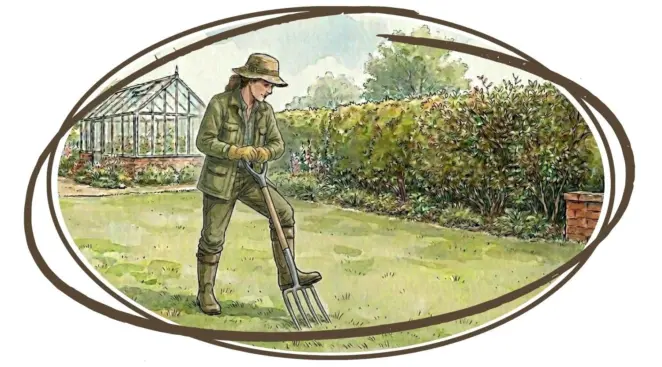
Aeration is the process of making small holes in the ground to loosen it and help air, water, and nutrients reach your grass’ roots more easily. It is ideally done right after scarifying since any debris is removed, allowing for better contact with the soil.
Depending on your lawn’s needs, you can either carry out spike aeration or plug aeration.
Spike aeration pokes holes in the ground without removing any soil, making it a good choice for lawns that aren’t too compacted.
Plug aeration uses hollow tubes to remove small plugs of soil. These can then be left on the lawn to break down and act as a natural fertiliser, which also helps to break down thatch. If your lawn is heavily compacted, choose this option.
For step-by-step instructions on how to do this, follow our ‘Lawn Aeration and Scarification: The Ultimate Guide’.
5. Overseed
The fifth step in bringing your lawn back to life is overseeding.
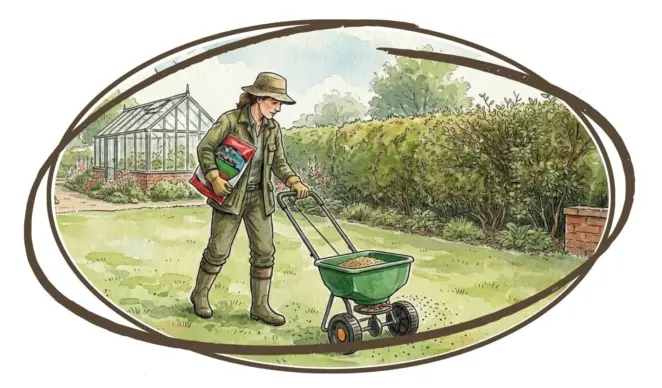
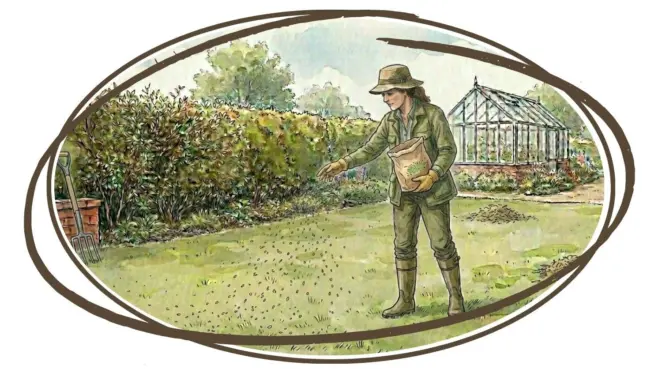
In simple words, overseeding is the process of spreading new grass seed directly over an existing lawn. This helps create a healthier, denser lawn that can outcompete moss and weeds by taking up water, nutrients, sunlight, and space. Overseeding can also introduce new grass varieties, making your lawn more resistant to pests and diseases.
If you’re wondering how to overseed your lawn, simply spread a high-quality grass seed at a rate of 25 grams per square metre. For best results, we recommend using our Rye Gold Lawn Grass Seed. Made from the same high-quality mix of perennial ryegrass and red fescue as our best-selling Rye Gold Turf, it is designed to deliver professional results. It can handle heavy foot traffic, grow well in shade, and keep its rich green colour all year round. Then, spread some topsoil on top of the seeds. This will help retain moisture and protect the seeds against the elements and any pests from eating them. It will also add nutrients into the soil.
Depending on the weather, the young grass can appear within as little as 2 to 3 weeks, significantly improving the look of your lawn.
When Is It Better to Start Again?
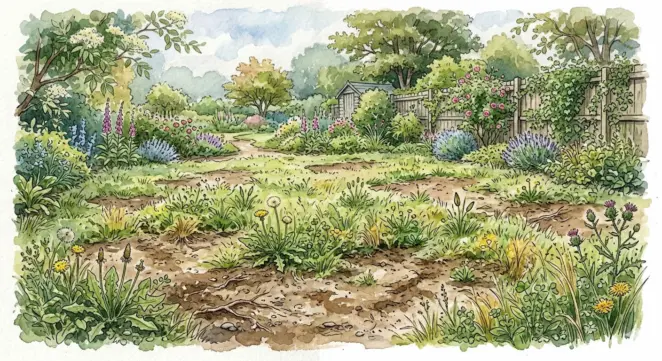
If most of your lawn is dead, diseased, or infested with weeds or moss, laying fresh turf can be the best way to restore your garden. Buying multiple chemicals to treat your old lawn can also add up quickly, potentially costing you more to fix it. It will also be time-consuming, leaving your outdoor space looking untidy and uninviting for longer.
Fresh turf, on the other hand, will give you an instant result, fully establishing in as little as 3–4 weeks. Turf is also very versatile and can be laid at almost any time of the year, as long as the ground is not frozen. On the other hand, grass seed need to be laid in the spring or autumn for the best results and highest chances of germination.
Here at Online Turf, we sell three different turf products, all of which use specific seed blends to make sure that each of our customers can find something that truly works for them and their needs. To learn more about this, check out our ‘A Beginner’s Guide to Online Turf Products’.
How to Keep Your Lawn Healthy for Years to Come
Once you have rejuvenated your lawn, there are multiple things that you can do to keep it looking its best for years to come:
• Fertilise your turf regularly: This should be done in the spring to help your turf recover from winter, and in autumn to repair any summer damage and prepare it for the colder months.
• Have a good mowing routine: Never cut more than one third of the grass height in one go so as not to stress or scalp the turf. According to Gardeners’ World, you should also ‘leave the grass clippings in place to act as a nutrient-rich mulch that will feed the grass.’
• Follow ‘Online Turf’s Lawn Care Calendar’: For advice on how to best take care of your grass, no matter the season.
Rejuvenating a lawn does not have to be complicated. By following our simple step-by-step advice and maintaining a consistent care routine, you too can have that healthy, intensly green grass that you’re proud of.
Are you ready to transform your lawn for the better? Explore our full range of products and get everything you need without unnecessary delays and at a great price!
