


How to Introduce Pollinator-Friendly Blooms to Your Turf
Are you thinking about transforming your garden into a pollinator haven?
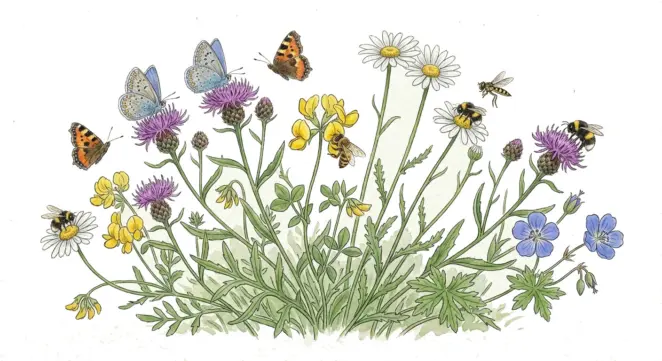
Adding wildflowers to your turf is a great way to do that. Wildflowers provide essential nectar for bees, butterflies, moths, and more. This supplies them with a continuous food source, helping to support their population. The more varieties of plants you introduce, the more insects your turf will attract and support. On top of this, a colourful wildflower lawn can add charm and character to your outdoor space.
From ‘No Mow May’ to sowing seeds into existing turf and creating a wildflower border, there are many ways in which you can create a pollinator garden.
The Modern Lawn: Why Biodiversity Matters
Not only do wildflower lawns look great, but they are also good for the environment. According to English Heritage, meadows are in decline ‘with 97% of this habitat lost in Britain since World War II.’ As a result, there is now less natural territory for pollinators to rely on. This causes their numbers to decline, negatively impacting biodiversity.
In simple terms, biodiversity covers all life on Earth. It is often used to describe the number and variety of species in an area. Its decline affects food production and the natural resilience of the environment.
Adding wildflowers to your turf helps support biodiversity by increasing the variety of plant species in your garden. This provides a wider range of pollinators and insects with a food source and a habitat they can live in. It also supports other wildlife, such as birds, helping to create a more balanced and self-sustaining ecosystem.
You don’t need to turn your entire lawn into a wildflower meadow to make a difference. If you prefer, choosing not to mow for a month, selecting a specific zone, or creating a managed border can be enough to make a difference.
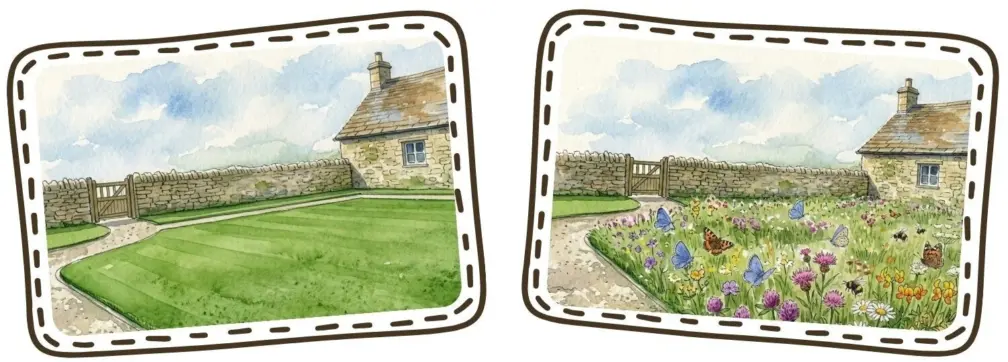
Method 1: The 'No Mow May' Approach
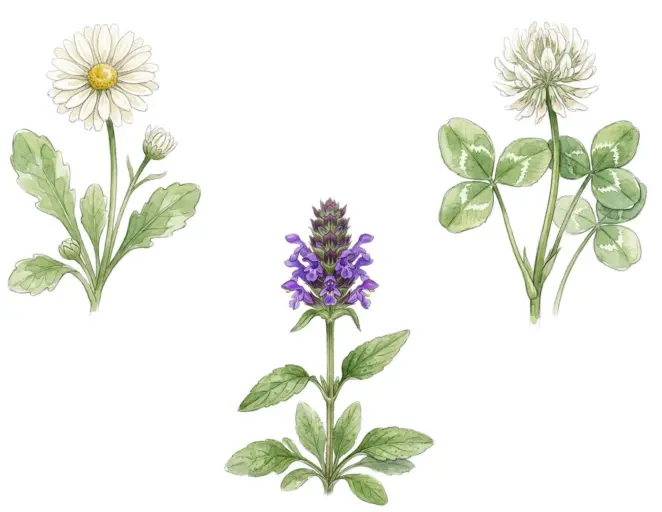
No Mow May is a movement started in 2019 by a charity called Plantlife. It is one of the easiest ways to introduce wildflowers into your lawn since all you have to do is put your mower away for the whole month of May. This allows any dormant seeds in your soil, such as clovers, daisies, and selfheal to bloom naturally within your turf. Regular mowing prevents this because it keeps cutting the plants before they can grow tall enough or mature enough to flower. Alternatively, it can also prevent the right conditions, such as moisture levels, for seeds to germinate in the first place.
No Mow May is great for the environment, supporting pollinators by providing them with an early-season food source. It also quickly adds colour and character to your outdoor space, making your lawn look more natural and diverse. The best part? You don’t have to stop mowing your lawn altogether to take part! If you’re still after that manicured look that many people love, simply stop mowing just a section of your lawn to get the best of both worlds.
Method 2: Sowing Seeds into Existing Turf
While it may seem like a great idea to simply scatter wildflower seeds on your lawn, you need to know how to plant wildflowers in grass for best results. Grass is very competitive and is likely to prevent new seeds from germinating as it does not want to share nutrients, water, and light.
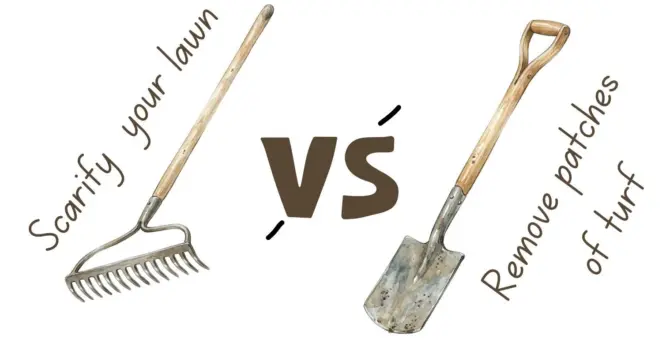
There are two different things you can do to succeed. The first one is to heavily scarify your grass. This will weaken it, reducing the competition. It will also allow the seeds to have better contact with the soil, increasing germination rates for your flowers. Depending on the size of the area that you are dealing with, this can either be done with a rake or a scarifier. For step-by-step instructions on how to best scarify your lawn, visit our ‘Lawn Aeration and Scarification: The Ultimate Guide’.
Alternatively, you can use a sharp spade or a turf cutter to remove small patches of turf. This reduces the competition completely and allows direct contact with the soil.
Once this is done, you can then sow your seeds at a rate of 1-2 grams per square metre if using a pure wildflower mix. For a wildflower and grass mix, aim to use around 5 grams per square metre. This rate ensures a proper balance, allowing flowers space to establish without being overwhelmed by grass. However, wildflower seeds aren't your only option. If you'd rather enjoy spring displays of daffodils, crocuses, or snowdrops, read our 'How to Plant Bulbs in Your Lawn Without Damage' blog.
Protect the Seeds with Topsoil
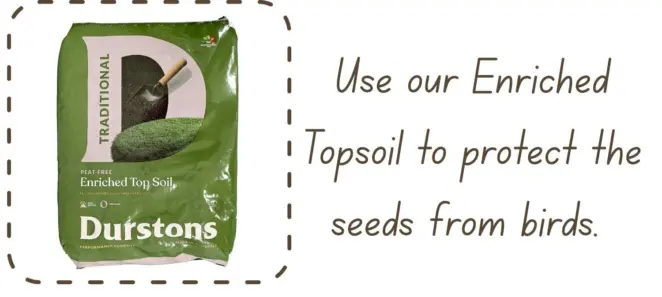
To give your seeds the best chance of establishing, make sure to spread some high-quality topsoil on top of your seeds. The mix of sterilised loam and added organic matter makes our Enriched Topsoil the perfect product for this. Not only will it give your wildflowers a little boost, but it will also improve the soil’s texture and protect the seeds from being eaten by birds or blown away by wind. A thin layer will also further improve seed-to-soil contact, which is essential for successful germination and more even growth.
In simple terms, it will help you achieve your dream meadow grass with less effort.
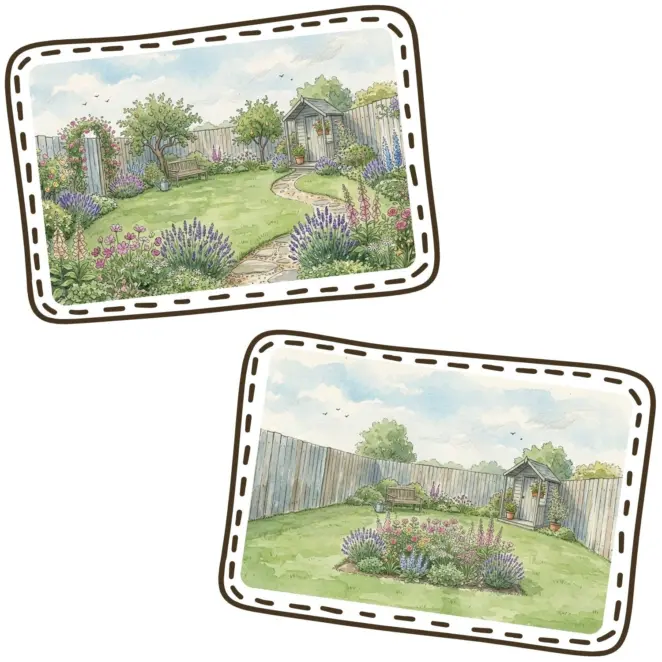
Method 3: Creating a Wildflower Border or 'Island'
The process of creating a wildflower border or island is very similar to sowing seeds in an existing lawn, by removing sections of turf.
Start by deciding where you want your borders to go or how big your island should be. The best thing to do at this stage is to draw a plan of your garden and try a few different options to make sure that you are happy with the final result.
Once you have decided what works for you, it is time to bring your vision to life. To do this, start by removing turf using either a spade or a turf cutter until you achieve the desired shape. Lightly loosen the soil underneath to create a good base for sowing.
Then, simply sow your seeds in these sections using the correct sowing rates for a pure wildflower mix or a wildflower and grass mix. This method works particularly well because it removes grass competition completely. It also allows you to design more intentional features within your garden, giving your lawn a more structured and manicured look.
To finish it off, apply a very thin layer of topsoil on top to protect your seeds and increase the chances of germination.
Maintenance: How Mowing Changes
Wildflower lawn maintenance varies slightly depending on whether you choose an annual, perennial, or mixed meadow.
An annual meadow should only be cut once a year, in late summer or autumn. This allows the spent plants to produce seed and keep your wildflowers going the following year. However, it is still best to add some more seeds for the second year, in case this is not sufficient for a rich flower display.
For a perennial wildflower lawn or one that has a mix of perennial and annual flowers, mow it regularly in the first year. This will encourage the perennial flowers and grass to make strong root growth. According to the RHS, you should ‘cut to a height of 5cm (2in), about six to eight weeks after the seedlings appear, and repeat every two months throughout the first summer. These cuts can be lower, at 4cm (1½in).’
After the first year, it can then be cut in the spring, no later than the end of April, then between late June and August, and in autumn, to remove surplus growth and help to keep grass at bay.
Remember, whether you have an annual, perennial, or mixed wildflower lawn, always remove grass clippings after each mow. This will reduce soil fertility, allowing your wildflowers to thrive. Too many nutrients can have the opposite effect, causing grass to outcompete them.
Choosing the Right Mix
Choosing the right mix for your wildflower meadow grass is important for more reasons than just maintenance.
Annual wildflowers are great if you are looking for quick results. They grow fast and provide bright, colourful displays within just a few months, making them ideal if you want an instant impact. However, they only last for one season, meaning you will need to re-sow them each year to maintain the look.
Perennial wildflowers, on the other hand, will typically not be vibrant in the first season, as they focus on developing strong root systems for the future. However, once established, they will return year after year. This makes them a great choice if you are looking to create a more permanent meadow-style area.
For optimal balance, many people choose to use a mix of both. That way, they can enjoy their outdoor space looking beautiful without any delay, while also benefiting from an established meadow grass later on. Simply mix annual and perennial wildflower mix with high-quality grass seed, such as our Rye Gold Lawn Seed, and transform your space into a haven for pollinators.
Will Wildflowers Ruin My Lawn?
It is a common concern that introducing wildflowers into your lawn will ruin it. In reality, it will simply change it.
Instead of a neatly manicured look, your lawn (or sections of it) will be more varied in height, texture, and colour as different wildflowers come into bloom. While this may be a big visual change, it is a positive step for ecological health – contributing positively to the overall biodiversity of your garden. At the same time, it will add a natural charm to your outdoor space.
Adding wildflowers to your turf doesn’t have to be complicated.
From No Mow May to sowing wildflowers into existing turf or designing a dedicated border or island, there are plenty of ways to transform your garden into a more pollinator-friendly space.
Are you ready to get started? Explore our full range of topsoil and grass seed today and bring your vision to life!
